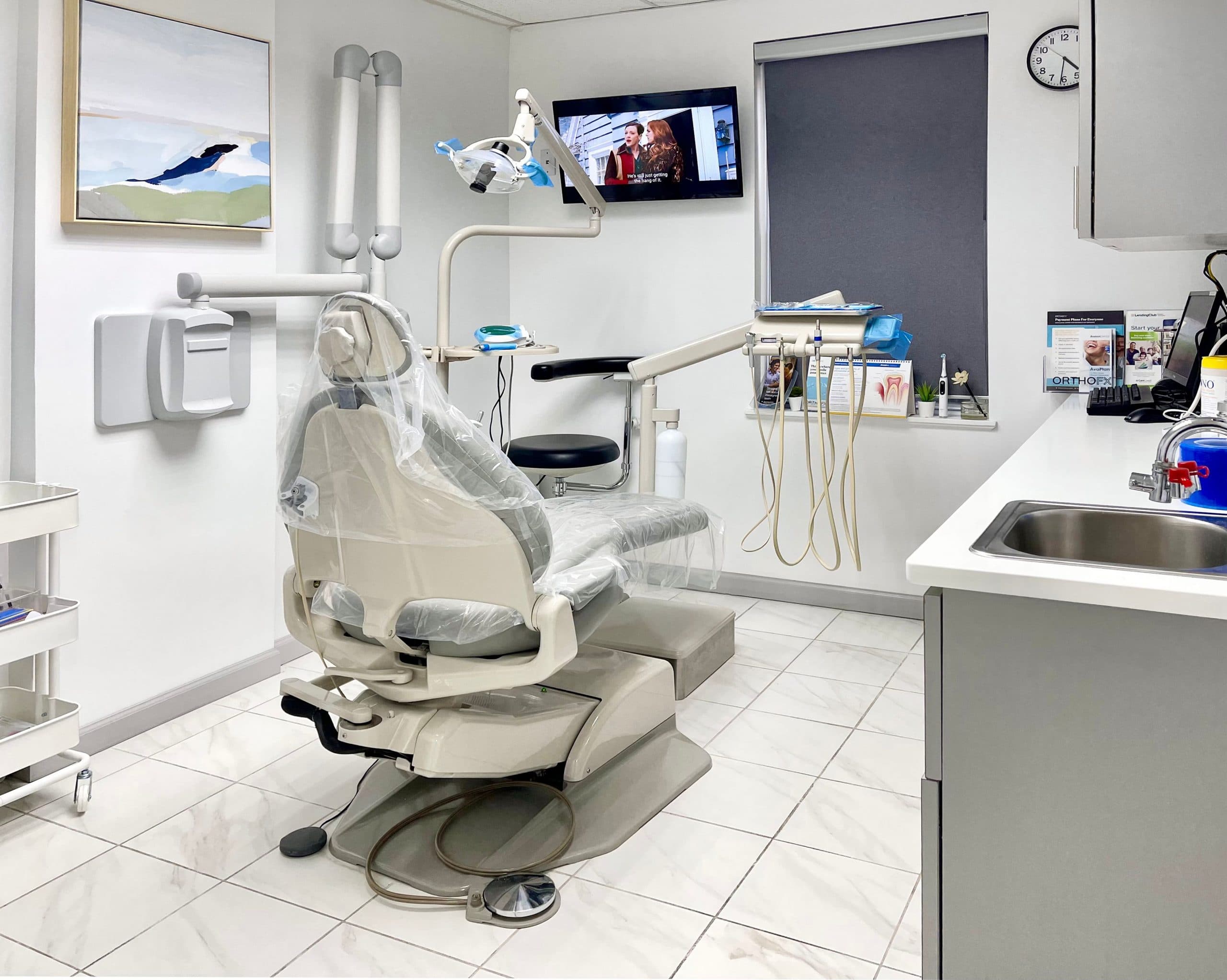
Teeth whitening works effectively on natural enamel, lifting both surface stains and some deeper discoloration, and you should talk to a dentist before starting any treatment. Bleaching agents break down the pigment molecules trapped in enamel, which is why coffee, tea, wine, and tobacco staining responds well while deep intrinsic discoloration from injury or medication responds far less reliably.
Whitening agents also do nothing at all to veneers, crowns, fillings, or bonding, since those materials hold the shade they were made in. Below we cover how whitening actually works, which method produces the biggest change, what the research says about whether the light does anything, whether whitening harms enamel, how often it can be repeated, and the four situations where a conversation with your dentist should come first.
Does Teeth Whitening Work?
Yes, teeth whitening works on natural enamel, and most patients see a visible change after a single professional treatment. A single professional treatment is the benchmark, and the American Dental Association reports that in-office bleaching agents brighten teeth by three to eight shades across a 30 to 60 minute application.
Application time is only part of what decides the result. How much change you see depends on the type of staining you have, how dark your teeth were to begin with, and whether the surfaces being treated are natural tooth structure at all. Those three variables explain almost every difference between one patient’s outcome and another’s.
Another patient’s outcome is a poor benchmark for your own, which is the single most useful thing to know before booking. Our own in-office teeth whitening runs 1 to 2 hours and finishes most patients 1 to 3 shades lighter, and we tell people that figure in advance rather than after.
How Does Teeth Whitening Work?
Teeth whitening works by using peroxide to break down the chemical bonds in the pigment molecules trapped inside enamel, which stops them absorbing light and makes the tooth appear lighter. Pigment molecules are the whole target, and the process is chemical rather than abrasive.
Chromogens are the clinical name for those pigment molecules, and they come from coffee, tea, red wine, dark berries, and tobacco. These molecules lodge inside the microscopic pore structure of enamel and darken it gradually over years. Enamel pores are what peroxide travels through, diffusing inward until it reaches the trapped pigment and splits it apart.
Splitting pigment apart is the entire mechanism, and two agents do it. Hydrogen peroxide acts directly and is used in higher concentrations for in-office treatment. Carbamide peroxide breaks down into hydrogen peroxide more slowly and is used at 10% to 16% in dentist-provided take-home trays, according to the American Dental Association, which is why trays work over days rather than in one appointment.
What Kinds of Stains Does Teeth Whitening Work On?
Teeth whitening works best on extrinsic stains, the surface discoloration caused by food, drink, and tobacco, and works far less predictably on intrinsic stains that sit inside the tooth. Inside the tooth is a meaningfully different problem, because peroxide has further to travel and less to act on.
Less to act on describes intrinsic discoloration well. Intrinsic stains come from aging, trauma, infection, childhood tetracycline exposure, or fluorosis, and they live in the dentin layer rather than the enamel surface. Some lighten with extended treatment and some barely move at all, which is why an evaluation matters more for this group than for anyone else.
Anyone dealing with long-standing stained teeth benefits from knowing which category they fall into before spending money on a treatment that may not suit the problem.
Does Teeth Whitening Work on Yellow Teeth?
Yellow teeth respond to whitening better than almost any other shade, because yellow discoloration usually comes from surface pigment and from dentin showing through thinning enamel. Thinning enamel and surface pigment are both things peroxide addresses directly.
Directly is not the case for every color. Gray or bluish discoloration, often from trauma or tetracycline, sits deeper and responds slowly and unevenly. Brown mottling from fluorosis behaves differently again. Yellow is the shade most people have and the shade that whitens most predictably.
Can Aging Yellow Teeth Be Whitened?
Aging teeth can be whitened and often respond well, though the realistic ceiling is lower than for a younger patient. A younger patient has thicker enamel and paler dentin underneath, so peroxide works through more translucent material over a lighter background.
A lighter background is what older teeth lack. Decades of chewing thin the enamel layer while the dentin beneath grows darker and denser as secondary dentin forms. Clearing the pigment held in the enamel still produces a genuine, visible lift, and the final shade reflects the dentin showing through rather than the enamel alone.
Does Whitening Work on Crowns, Veneers, and Fillings?
Whitening does not work on crowns, veneers, fillings, or bonding, because those materials are manufactured in a fixed shade and do not respond to peroxide at all. No response at all is the American Dental Association’s position: only natural teeth are affected by bleaching agents, and patients with tooth-colored restorations should expect a difference to appear between their natural teeth and their dental work.
A difference appearing is the outcome people discover after whitening rather than before. Natural teeth lighten, the restorations stay exactly where they were, and a front tooth that used to blend suddenly stands out. Porcelain veneers hold their color beautifully over many years, which is a strength in daily life and a planning issue at whitening time.
Planning around it is simple when the order is right. We whiten first, let the shade settle, then match any new restoration to the brightened result. Patients who already have dental crowns on visible teeth should expect replacing or refacing them to be part of the conversation if a uniform result is the goal.
The goal shapes the sequence for older filling material too. Existing composite fillings on front teeth behave exactly as crowns do and may need replacing afterward to blend in again. None of this rules whitening out; it simply means the work happens in a particular order.
Does the Light Actually Do Anything in Teeth Whitening?
The light used during in-office whitening does far less than most people assume, and published research has repeatedly found that light or laser activation does not improve the final result. Does not improve the final result is a stronger statement than marketing usually allows, and it comes from a consistent body of evidence rather than a single study.
A single study would not carry much weight here, so the figures below come from pooled reviews. A systematic review and meta-analysis published in the Journal of Dentistry found that light activation did not enhance bleaching efficacy at hydrogen peroxide concentrations of 25% to 35%, while light-activated systems raised the likelihood of tooth sensitivity with an odds ratio of 3.53. An umbrella review in the Journal of Esthetic and Restorative Dentistry drew on ten systematic reviews published between 2007 and 2024 and found that laser or light activation showed no consistent improvement in final whitening efficacy compared with protocols using no light at all.
No light at all performing comparably tells you where the work actually happens. A separate umbrella review published in Heliyon found in-office and at-home techniques produced comparable color change and carried the same sensitivity risk, even with light activation in the mix. Peroxide concentration and contact time are the variables that move the shade.
Contact time is also why concentration is not a simple more-is-better equation. A meta-analysis by Maran and colleagues found hydrogen peroxide at 25% to 35% produced outcomes comparable to 35% to 40%, and a review cited by the American Dental Association found lower concentrations delivered less sensitivity alongside greater objective color change. Stronger is not automatically better, which is a useful thing to know before buying the strongest product on a shelf.
What Does the Light Do in Teeth Whitening?
The light in a whitening appointment helps activate and warm the gel, and it structures the session into timed application cycles rather than adding shades on its own. Timed cycles are genuinely useful, because they define when the gel is removed and reapplied so fresh peroxide meets the tooth surface several times in one visit.
Several times in one visit is what produces a same-day result, and that comes from the repeated fresh application rather than from the lamp. In our own protocol we coat the teeth, activate with a blue light, and remove and reapply the gel several times across the appointment, and the reapplication is doing the heavy lifting. Anyone comparing LED whitening, laser whitening, or a branded light-activated system should judge them by gel strength, session length, and number of applications rather than by the color of the lamp.
Which Teeth Whitening Works Best?
In-office professional whitening produces the largest change in the shortest time, dentist-supervised take-home trays come second, and over-the-counter products deliver progressively smaller results as the peroxide concentration drops. Peroxide concentration is the ranking principle, and the table below sets the options against each other using figures from the American Dental Association and from pooled clinical research.
| Method | Active Agent and Strength | Realistic Shade Change | Time to Results |
|---|---|---|---|
| In-office professional whitening | High-concentration hydrogen peroxide, applied under supervision | Several shades, commonly three to eight | One visit of 30 to 60 minutes of active application |
| Dentist-supervised take-home trays | 10% to 16% carbamide peroxide in custom trays | Comparable to in-office over time | 7 to 14 days of daily wear |
| Whitening strips | Low-concentration hydrogen peroxide | Modest, typically one to two shades | 1 to 2 weeks |
| Over-the-counter gels and pens | Low-concentration peroxide | Minimal and often uneven | Days to a week |
| Whitening toothpaste | Mild abrasives, sometimes low-level peroxide | Surface stain only, no change to tooth color | 2 to 6 weeks |
| Whitening mouthwash | Low-concentration hydrogen peroxide | Very small, best as a supplement | Up to 3 months |
Custom trays deserve more credit than they usually get. An updated systematic review and meta-analysis published in Operative Dentistry found no significant difference between at-home and in-office bleaching in shade guide unit change, which means dentist-supervised trays reach a comparable endpoint over a longer period. The practical difference is speed and supervision rather than ceiling.
Supervision is also the real gap between dentist-provided trays and anything bought off a shelf, since custom trays hold gel against the teeth and away from the gums while a boil-and-bite tray does neither reliably. Every in-office professional whitening we provide at our Flushing office includes a complimentary custom take-home tray for touch-ups, which combines both approaches.
Why Are Your Teeth Still Yellow If You Use Whitening Toothpaste?
Your teeth are still yellow despite whitening toothpaste because most whitening toothpastes only polish surface stain away and cannot change the underlying color of the tooth. Cannot change the underlying color is the limitation nobody prints on the box.
The box describes the real mechanism accurately if you read it closely: mild abrasives scrub off fresh film from coffee and tea, and some formulas add a small amount of peroxide. Neither reaches the pigment sitting deeper in the enamel, and neither touches dentin color at all. Whitening toothpaste is a maintenance product, useful for holding a result you already have, rather than a way to achieve one.
Is Teeth Whitening Bad for Your Teeth?
Teeth whitening is safe for your teeth when it is supervised by a dentist or when you use at-home products carrying the ADA Seal of Acceptance, and the common side effects are temporary rather than lasting. Temporary rather than lasting describes both of the effects patients actually encounter.
Patients encounter tooth sensitivity and mild gum irritation, and both settle quickly. What whitening does not do is dissolve teeth, soften them permanently, or thin enamel in any way you would notice. The peroxide reaction targets pigment, not mineral structure.
Does Teeth Whitening Damage Enamel?
Teeth whitening does not damage enamel in any clinically meaningful way at supervised concentrations, though research has noted small changes worth knowing about. Worth knowing about is different from worth worrying about, and the honest version of the answer includes both parts.
Both parts come from the same source. Research cited by the American Dental Association notes that bleaching protocols may alter the surface roughness of enamel and may reduce the bond strength between enamel and composite or ceramic restorations. That second point is the practical one: it is a reason to space whitening and bonding work apart rather than doing them back to back, and it is not a reason to avoid whitening.
Avoiding whitening makes more sense for a different group, namely anyone with untreated decay, active gum disease, or exposed root surfaces. Those conditions let peroxide reach places it should never reach, which is uncomfortable and unhelpful, and all three are straightforward to address first.
How Long Does Sensitivity After Whitening Last?
Sensitivity after whitening lasts 24 to 48 hours for most patients and usually fades without any treatment. Published research puts the absolute risk of sensitivity at roughly 63% for in-office and 51% for at-home bleaching, with average intensity measuring about 2.8 centimeters on a 10 centimeter scale, which sits firmly in the mild range.
The mild range is where most people land, and it can be reduced further. A systematic review of 13 trials covering 841 patients found 5% potassium nitrate with 2% sodium fluoride applied before treatment significantly lowered post-treatment pain scores. Patients who have dealt with tooth sensitivity after other dental work usually recognize the sensation and find it just as short-lived.
How Often Can You Whiten Your Teeth?
You can have a full professional whitening treatment about once every six to twelve months, with short take-home tray touch-ups in between whenever the shade starts to soften. In between is where most of the maintenance happens, and a brief tray session holds a result far more easily than a full treatment restores one.
Restoring a fully faded shade takes more peroxide and more chair time than maintaining a good one, which is the practical argument for touching up early. Spacing full sessions properly also keeps sensitivity low, since back-to-back treatments give enamel no time to rehydrate between sessions.
Between sessions, a custom tray used for a short refresh covers almost every situation. Patients who whiten once and then touch up two or three times a year generally stay ahead of the drift without ever needing another full appointment.
How Old Do You Have to Be for Teeth Whitening?
Most dentists whiten teeth from the mid-teens onward, once all the permanent teeth have erupted, and cosmetic bleaching is not recommended for younger children. Younger children are the clear exception, and the position is well established.
Well established means the American Academy of Pediatric Dentistry discourages full-arch cosmetic bleaching for children and adolescents in the primary and mixed dentition. Mixed dentition is the stage where baby teeth and permanent teeth are both present, and whitening then produces an uneven result as the remaining baby teeth fall out.
Falling out is only part of the reasoning. Younger teeth have larger pulp chambers relative to tooth size, which makes them more prone to sensitivity, and enamel is still maturing after eruption. Waiting until the permanent dentition is complete gives a more even result with less discomfort.
How Can You Tell If Teeth Whitening Is Working?
You can tell whitening is working by comparing your teeth against a shade guide or a dated photograph rather than by looking in the mirror each day. Looking in the mirror each day is the least reliable method available, because gradual change is almost invisible to the person living with it.
Living with it is exactly why we record a starting shade against a standard guide before any treatment and record the finished shade afterward. A photograph taken in consistent lighting works nearly as well at home. Our smile gallery shows the kind of change professional treatment produces, which gives a more realistic reference point than a stock image ever will.
A realistic reference point matters because the shade you see immediately after treatment is not the shade you keep. Enamel dehydrates slightly during whitening and looks chalky and overly bright for a day or two, then settles into a more natural final color as it rehydrates.
Why Don’t My Teeth Look White After Whitening?
Your teeth may not look as white as expected after whitening for three common reasons: the discoloration is intrinsic rather than surface-level, the dentin underneath is naturally dark, or the reference point you are comparing against is not achievable on natural teeth. Not achievable on natural teeth covers more disappointment than the other two combined.
Combined expectations often come from photographs of porcelain rather than enamel. The bright, uniform white seen in many images is veneer color, not bleached tooth color, and no peroxide treatment reaches it. Natural teeth have translucency and slight variation at the edges, and a good whitening result looks like a brighter version of your own teeth rather than a different set.
A different set is what veneers or bonding deliver, and those remain the route in cosmetic dentistry for anyone whose target is beyond what enamel can reach. Knowing which outcome you actually want is the conversation worth having before treatment rather than after it.
When to Ask Your Dentist
Ask your dentist before starting any whitening, whether that means a store-bought kit or a scheduled procedure, and particularly if you have oral health issues, existing dental work on visible teeth, or a history of sensitivity. Before starting anything is the general rule, and these four situations make it essential:
- Before any treatment. A short conversation establishes whether whitening suits your staining at all, which saves both money and disappointment.
- Oral health issues. Untreated cavities, gum disease, or exposed root surfaces all react badly to bleaching agents and need addressing first.
- Existing dental work. Crowns, veneers, and front fillings will not change color, and a dentist can tell you whether they will need replacing to match a new shade.
- Severe sensitivity. Frequent tooth pain or gum irritation calls for a controlled protocol and desensitizing preparation rather than an over-the-counter kit.
Gum disease deserves particular attention here, since inflamed tissue reacts far more strongly to any contact with bleaching gel. Treating gum inflammation before whitening makes the appointment more comfortable and the result more even.
An even result also depends on the teeth being clean when the gel goes on. Plaque and tartar block peroxide from reaching enamel uniformly, which is why professional dental cleanings are usually scheduled before a whitening appointment rather than after it.
A whitening consultation covers more ground than most people expect, and it generally runs like this:
- A dental exam checking for decay, gum disease, cracks, and exposed root surfaces.
- An assessment of whether your discoloration is extrinsic, intrinsic, or a mix of both.
- A review of any crowns, veneers, bonding, or front fillings and how they will affect the plan.
- A recorded starting shade against a standard guide, so progress can be measured objectively.
- A discussion of sensitivity history and whether desensitizing preparation makes sense.
- A recommendation on method, whether that is in-office, custom trays, or a combination.
- A realistic estimate of how many shades your teeth can actually move.
Patients across Queens who start with a checkup exam rather than a whitening appointment almost always end up happier with the outcome, because the plan fits the teeth rather than the other way around.
Frequently Asked Questions
Is Getting Your Teeth Whitened at the Dentist Worth It?
Professional whitening is worth it for most people who want a visible change quickly, because the peroxide concentration is higher, the gel is kept off the gums, and the treatment is matched to your actual staining. The ADA reports in-office agents producing three to eight shades of change in a single 30 to 60 minute application, which no over-the-counter product approaches. The supervision also catches problems like untreated decay before bleach reaches them.
Is Teeth Whitening Permanent?
Teeth whitening is not permanent, because bleaching removes existing pigment without preventing new pigment from settling in. Results hold for a meaningful period with good maintenance and then drift gradually as coffee, tea, wine, and tobacco reintroduce staining. Touch-ups with a custom tray keep the shade where you want it without repeating the full treatment.
Is Yellow Teeth Bad Hygiene?
Yellow teeth are not necessarily a sign of poor hygiene, and plenty of people with excellent brushing habits have naturally yellow-toned teeth. Enamel thickness and dentin color are largely inherited, and enamel thins with age regardless of how well you care for it. Hygiene affects surface staining, which is only one of several things contributing to overall tooth color.
Does Whitening Work on Gray Teeth?
Gray teeth respond to whitening more slowly and less predictably than yellow teeth. Gray discoloration usually comes from trauma, nerve changes, or childhood tetracycline exposure, all of which sit inside the dentin rather than on the enamel surface. Extended treatment sometimes helps, and veneers or bonding are often the more reliable route for a single dark tooth.
Can You Whiten Your Teeth With Braces or Clear Aligners?
Whitening during fixed braces is not recommended, because the brackets block the gel and leave unwhitened squares once they come off. Clear aligners are different, since they are removable and the teeth are fully exposed. Whitening after orthodontic treatment finishes, rather than during it, gives an even result across every surface.
Should You Whiten Before or After Getting a Crown?
Whiten before getting a crown, always. A crown is matched to the shade of your teeth on the day it is made, and that shade is locked in permanently afterward. Whitening first, letting the color settle for a week or two, then having the crown fabricated to the new shade produces a match that lasts.
Can You Whiten Your Teeth While Pregnant?
Cosmetic whitening is generally postponed during pregnancy and nursing, not because of proven harm but because elective treatments are usually deferred and the safety data is limited. Most dentists will recommend waiting and focusing on cleanings and preventive care in the meantime. Discuss the timing with both your dentist and your physician.
The Bottom Line
Teeth whitening works, and it works on natural enamel only. Surface staining from coffee, tea, wine, and tobacco lifts readily, deeper intrinsic discoloration responds slowly or not at all, and crowns, veneers, bonding, and fillings hold whatever shade they were manufactured in. Those three facts explain nearly every difference between a result someone loves and one that disappoints.
The thing that produces the change is peroxide concentration and contact time, not the lamp. Pooled research across ten systematic reviews found no consistent improvement in final whitening efficacy from light or laser activation, and one meta-analysis found light-activated systems raised sensitivity risk with an odds ratio of 3.53. Judge any whitening option by gel strength, contact time, and supervision rather than by the technology attached to it.
If you are weighing whitening and want a straight answer about what your own teeth can realistically do, we are glad to take a look and talk it through. You can reach Avalon Dental at (347) 472-0318, or contact us online to schedule a visit.