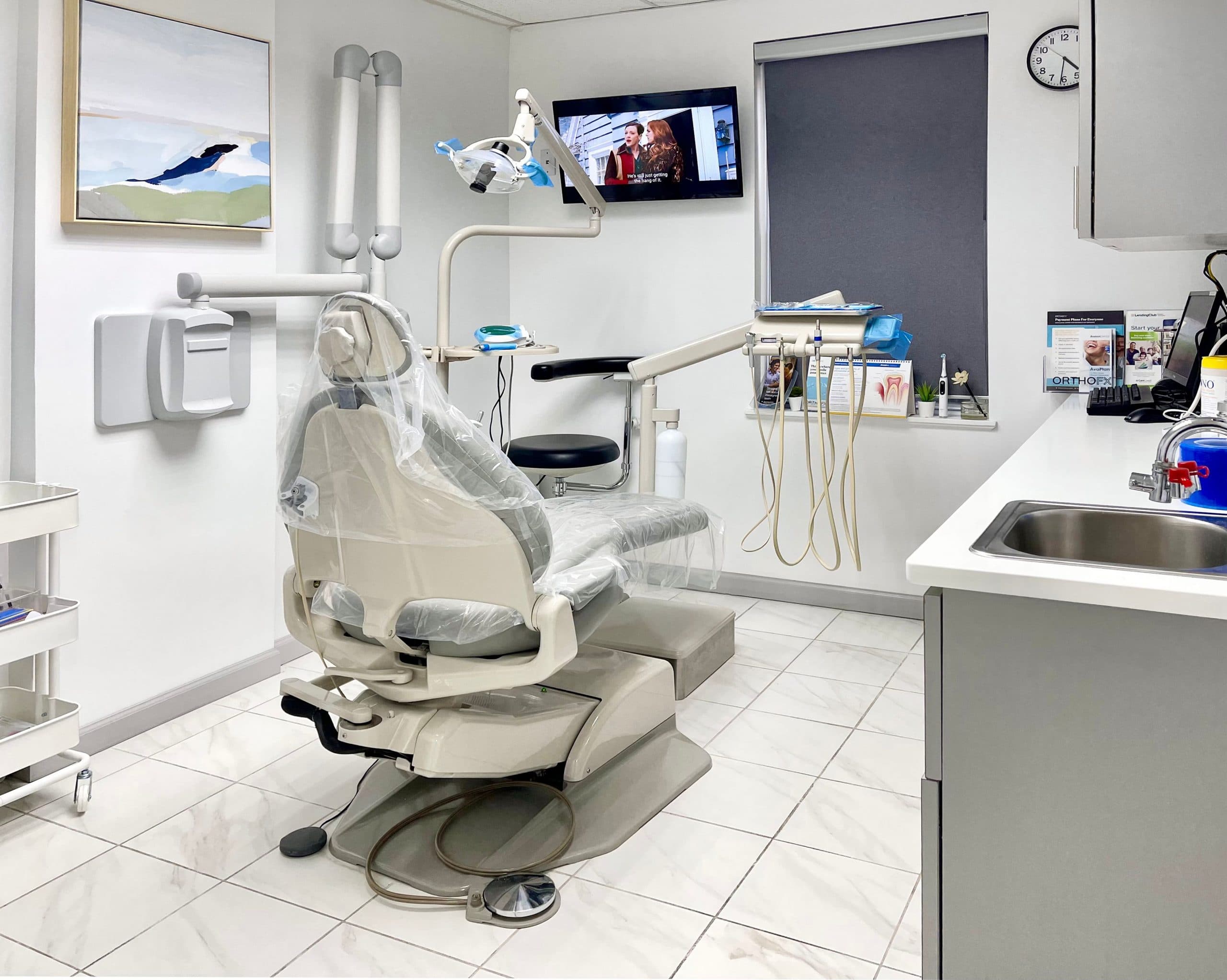
A tooth extraction takes about 3 to 7 days to stop being sore, 1 to 2 weeks for the gum surface to close, and 3 to 4 months for the bone underneath to fill in. Those three numbers answer different questions, which is why the same procedure gets described as a few days by one source and several months by another. The range also shifts depending on which tooth came out and how it came out. Below we break the timeline down by tooth type, explain why a molar heals slower than a front tooth, cover what slows healing down, and give the wait times before you can replace the tooth with a bridge, a denture or an implant.
How Long Does a Tooth Extraction Take to Heal?
A tooth extraction heals in three overlapping stages: 3 to 7 days of soreness, 1 to 2 weeks for the gum to close over the socket, and 3 to 4 months for the bone to rebuild underneath. Only the first of those three is something you feel.
Most people are back to normal daily activity within 48 to 72 hours and back at work or school within a day or two, provided the job does not involve heavy lifting. Soreness peaks on day three rather than on the day of the procedure, then falls away steadily.
The bone timeline runs quietly underneath all of that. Woven bone becomes detectable roughly two weeks after a tooth extraction, a prospective human study found mineralized bone occupying 88 percent of the socket volume by day 30, and early histology reported sockets completely filled with bone at 15 weeks. On an X-ray, density starts increasing around 38 days and matches the surrounding bone at roughly 105 days.
Two different processes are running at once, and they move in different directions. Bone fills the socket from the walls and the floor. The gum surface closes across the top, growing inward from the margins. Neither is filling a hole from the bottom up in the way most people picture it.
Why Does Healing Time Vary So Much?
Healing time varies because two things change the size of the wound: which tooth was removed, and whether the extraction was simple or surgical. Everything else, including your age and your habits, modifies those two rather than replacing them.
Tooth type sets the size and shape of the socket left behind. A lower front tooth has one narrow root. A first molar has two or three roots spread apart, leaving a wider and more complex void. More socket volume means more tissue to rebuild and more time to rebuild it.
Extraction type sets how much of the surrounding tissue was disturbed getting the tooth out. A simple extraction lifts a visible tooth out through the socket it already occupies. A surgical extraction opens the gum, sometimes removes bone, and often sections the tooth, all of which adds healing work on top of the socket itself.
Those two variables explain most of the difference between two people comparing notes and wondering why one felt fine at day four and the other did not. The next five sections work through them.
How Long Does a Front Tooth Take to Heal?
A front tooth takes about 5 to 7 days of soreness to heal, with the gum closing over in roughly 1 to 2 weeks, which makes it the fastest extraction site in the mouth. Incisors and canines have a single root, so the socket they leave is narrow and shallow relative to a back tooth.
A smaller socket means less granulation tissue to form, less surface for the gum to travel across, and less volume for bone to fill. Most people notice the tenderness dropping off sharply after day three and describe the site as unremarkable by the end of the first week.
Front teeth carry one consideration back teeth do not, and it is cosmetic rather than biological. The gum contour over a front socket is visible when you smile, and the ridge changes shape as it heals. That is why replacement planning for a front tooth usually starts at the time of the extraction rather than afterward.
How Long Does a Premolar Take to Heal?
A premolar takes about 5 to 7 days of soreness to heal, close to a front tooth, with gum closure in 1 to 2 weeks. Premolars sit between the canines and the molars, and their sockets sit between those two in size as well.
Most upper premolars have one root and some have two, while lower premolars almost always have one. That variation is why two people can have the same tooth removed and have slightly different recoveries. A two-rooted upper premolar leaves a wider socket than a single-rooted lower one and takes a few extra days to feel settled.
Bone healing in the premolar region is also measurably kinder than in the molar region. Published review data shows premolar sites lose less bone width during healing than molar sites do, which matters if an implant is planned for the space later.
How Long Does a Molar Take to Heal?
A molar takes about 7 to 10 days of soreness to heal, with gum closure running closer to 2 to 3 weeks and jawbone healing taking up to four months. Molars are the slowest ordinary extraction site, and the reason is straightforward geometry.
Upper molars usually have three roots and lower molars usually have two, spread wide apart. The socket left behind is not one hole but a wide, multi-chambered space with a bony wall between the root sockets. That is far more volume to fill than a single-rooted tooth leaves, and published review data attributes the greater bone resorption seen at molar sites specifically to posterior teeth leaving a wider socket behind.
Which jaw the molar came from matters too, and almost nobody mentions it. Bone loss during healing is more pronounced in the mandible than in the maxilla, so a lower molar site remodels more than an upper one and typically feels tender for longer. Lower molars also sit in denser cortical bone, which is why they are harder to remove in the first place.
The table below compares healing by tooth, drawing its bone-resorption comparisons from the socket healing review literature and its soreness ranges from published clinical recovery reporting.
| Tooth | Socket Left Behind | Days of Soreness | Gum Closure | Bone Fill |
|---|---|---|---|---|
| Front tooth (incisor or canine) | Single narrow root | 5 to 7 days | 1 to 2 weeks | About 3 months |
| Premolar | One root, sometimes two | 5 to 7 days | 1 to 2 weeks | About 3 months |
| Upper molar | Usually three roots, wide socket | 7 to 10 days | 2 to 3 weeks | 3 to 4 months |
| Lower molar | Usually two roots, dense surrounding bone | 7 to 10 days | 2 to 3 weeks | Up to 4 months, with the most ridge remodeling |
| Impacted wisdom tooth | Surgical site with incision and bone removal | 7 to 10 days or longer | 2 to 3 weeks | 3 to 6 months |
How Long Does a Wisdom Tooth Take to Heal?
A wisdom tooth takes 7 to 10 days of soreness to heal and often longer, because most wisdom teeth require a surgical extraction rather than a simple one. The socket is molar-sized, the tooth is frequently impacted in bone, and the site usually involves an incision and stitches.
Lower wisdom teeth take the longest of any extraction, combining the widest socket, the densest bone and the most surgical access. Upper ones sit in softer bone and generally settle faster.
Wisdom teeth have enough differences from the rest of the mouth that we cover their timeline, preparation and recovery separately rather than folding them in here.
Simple or Surgical: Which Heals Faster?
A simple extraction heals faster than a surgical extraction, typically by several days, because a surgical extraction adds an incision and often bone removal on top of the socket itself. The same tooth removed two different ways produces two different recoveries.
A simple extraction loosens a fully visible tooth and lifts it out with elevators and forceps. The only wound is the socket. A surgical extraction opens a flap of gum, may remove bone covering the tooth, and often divides the tooth into sections before removing it, which means gum tissue and sometimes bone have to heal alongside the socket.
There is a mechanism behind the delay that is worth knowing. Raising a full gum flap temporarily disrupts the blood supply reaching the socket from the surrounding tissue, and published review data associates that disruption with greater bone resorption during healing. The flap is often necessary, and the trade is a few extra days of recovery for safe access to a tooth that could not be removed any other way.
Stitches are the other visible difference. Dissolvable stitches break down during the second week on their own, and non-dissolving ones come out at a follow-up. Anything requiring oral surgery gets a follow-up schedule built around that timeline rather than a generic one.
What Slows Extraction Healing Down?
Extraction healing is slowed most by smoking, and to a lesser degree by uncontrolled diabetes, existing gum disease, infection present at the time of removal, older age, and certain medications. Only one of those is fully within your control in the week that matters.
- Smoking. The largest single modifiable factor. A 2022 systematic review found dry socket incidence of about 13.2 percent in smokers against about 3.8 percent in non-smokers, roughly a threefold difference. Nicotine constricts the blood vessels feeding the site, and the inhaling motion creates suction on the clot.
- Uncontrolled diabetes. A comparative clinical study measured socket size reduction at day 7 of 62.5 percent in non-diabetic patients against 48.6 percent in diabetic patients, and animal work shows uncontrolled diabetes inhibits the collagen framework the socket needs. Worth noting honestly, a 2026 systematic review and meta-analysis of 500 diabetic and 364 control patients found larger day-7 socket size but no significant difference in the rate of genuinely delayed healing. Well-controlled diabetes is much less of an obstacle than the general warning suggests.
- Existing gum disease. A site with active gum disease starts healing from a worse baseline, with compromised bone walls around the socket.
- Infection at the time of extraction. A tooth removed because of an abscess heals more slowly than one removed for crowding.
- Age. Healing capacity declines gradually, and dry socket rates are measurably higher in patients over 30 than in those in their early twenties.
- Certain medications. Blood thinners, some bone medications and long-term steroids all change how a socket heals. Tell us what you take before the appointment rather than after.
- Multiple extractions at once. Review data shows multiple adjacent sites resorb more bone than a single site does.
Smoking is the one worth acting on. Pausing for the first 72 hours makes a measurable difference, and pausing longer makes a bigger one.
Does a Bone Graft Change the Healing Timeline?
A bone graft placed at the time of extraction does not make you feel better any faster, but it changes what the bone underneath looks like months later. The first week feels much the same. The difference shows up at the three-month mark.
The reason grafts exist is the speed of natural ridge loss. A 12-month prospective study by Schropp and colleagues measured alveolar ridge width dropping by roughly 50 percent within the first year, with most of that happening in the first three months. Bundle bone, the thin layer that lined the tooth root, resorbs first and fastest because its only job was supporting a tooth that is now gone.
Socket preservation places graft material into the socket at the time of the extraction to hold the shape of the ridge while natural bone grows in around it. Ridge augmentation rebuilds width or height that has already been lost. Sinus augmentation creates space in the upper back jaw when there is not enough bone height for an implant. All three are bone grafting procedures with different jobs.
Grafted sites generally need a little longer before implant placement than ungrafted ones, because the graft material has to be replaced by your own bone before it can support a post. That is time added at the back end of the process rather than to your recovery.
We do socket preservation in-house at our Flushing office, which means the decision gets made at the extraction appointment rather than at a separate consultation weeks later, when the window has partly closed. Our oral surgeon reviews the imaging before the tooth comes out so the plan is set in advance.
How Long Before You Can Replace the Tooth?
You can usually start a bridge or a partial denture 8 to 12 weeks after extraction, and an implant is typically placed 4 to 6 months afterward. The two timelines differ because the two treatments ask different things of the healed site.
Dental implants need bone to fuse to, so the socket has to be genuinely filled and stable before a titanium post goes in. Placing one into bone that is still remodelling risks the integration failing, and integration then takes another three to six months on top. The wait is front-loaded on purpose.
A bridge or a partial denture rests on or spans the ridge rather than anchoring into it, so the requirement is a stable shape rather than mature bone. Eight to twelve weeks gets the ridge settled enough that the restoration still fits properly a year later. Starting earlier means fitting an appliance to a contour that is about to change.
Planning the replacement before the extraction is the part that saves time. Knowing which of the replacement options you are heading toward determines whether a graft goes in on the day, and that single decision affects the next six months. Patients travelling in from across Queens and Long Island appreciate having that settled in one visit rather than three.
How Long Does Healing Take After Multiple Extractions?
Multiple extractions in one visit heal on roughly the same per-site timeline as a single extraction, but the overall recovery feels harder and the bone changes are greater. Each socket is still doing its own work on its own schedule.
What changes is the total surgical load. More swelling, more soreness across a wider area, more difficulty eating on either side, and a longer stretch before you feel like yourself. Patients who have several teeth out at once should plan for a slower first week than the per-tooth numbers above suggest.
The bone side is measurably different rather than just additive. Review data shows multiple adjacent extraction sites resorb more alveolar bone than isolated single sites do, because there is no neighboring tooth holding the ridge between them. That makes replacement planning and socket preservation more relevant, not less, when several teeth come out together.
How Do You Know Healing Is on Track?
You know healing is on track when pain trends downward after day three, the site changes appearance week to week, and there is no foul odor or taste. All three should be true at once.
Direction matters more than intensity. A site that hurts moderately but less each day is healing. A site that improved and then got worse is not following the normal curve, whatever the pain level.
What the socket should actually look like on each day, from the dark clot through the white granulation stage to the gum closing inward, is a topic of its own, and we cover the visual side separately.
What Can You Do to Heal Faster?
You can heal faster by protecting the blood clot through the first 72 hours, keeping the site clean without disturbing it, and pausing anything that reduces blood flow to the area. There is no way to accelerate bone healing, but there are several reliable ways to slow it down, and avoiding them is the whole strategy.
- Protect the clot for 72 hours. No straws, no spitting, no forceful rinsing, no smoking. This single window carries most of the risk.
- Rest for the first 24 hours. Anything that raises blood pressure restarts bleeding and increases swelling.
- Use cold then warm. Cold compress 15 minutes on and 15 off through the first day, switching to warm compresses from hours 24 to 48.
- Start gentle salt water rinses on day two. A quarter teaspoon in eight ounces of warm water, three to four times daily, letting it sit and fall out rather than swishing.
- Eat soft and eat enough. Under-eating slows healing more than the wrong texture does. Stay hydrated and keep protein in the diet.
- Keep the rest of your mouth clean. Brush and floss everything except the extraction site from the day after surgery.
- Take medication on the schedule given. Staying ahead of pain controls it with less medication than chasing it does.
All of that is covered in the written post-op instructions we send home with every extraction patient, and following them closely is genuinely the difference between a smooth week and a complicated one.
Once the site has closed over, it goes back into your normal maintenance schedule. A professional cleaning at the next visit keeps the neighboring teeth healthy, which matters most when the extraction happened because of decay or gum disease in the first place.
When Is Healing Taking Longer Than It Should?
Healing is taking longer than it should when pain is still significant past the first week, when the site looks unchanged across several days, or when swelling increases after day three instead of going down. Judging by timeline rather than by symptom is the more reliable test.
Three timeline markers are worth knowing. Pain that worsens on day 4 or 5 after improving points toward a dry socket, which is treatable in a single short appointment. Soreness still at full strength at day 10 after a simple extraction is outside the expected range. A socket that has not visibly started closing at three weeks deserves a look regardless of how it feels.
Fever, pus, a foul taste that rinsing does not clear, bleeding you cannot control with 30 to 45 minutes of firm gauze pressure, or numbness lasting well beyond the anesthesia window all warrant a call the same day. We keep room for same-day care because these things are quick to handle early and considerably harder later.
Frequently Asked Questions
What Is the Fastest Way to Heal After a Tooth Extraction?
The fastest way to heal after a tooth extraction is to protect the blood clot for the first 72 hours, which means no straws, no smoking, no spitting and no forceful rinsing. Nothing speeds bone healing up, but dislodging the clot adds days or weeks to recovery. Rest, soft food, adequate hydration and following the written instructions cover the rest.
How Long Should I Rest After Getting a Tooth Pulled?
You should rest completely for the first 24 hours and take it easy for the first three days after getting a tooth pulled. Most people return to routine activity within 48 to 72 hours and to work or school within a day or two. Physically demanding jobs and exercise need the longer end of that window, since raising your heart rate increases bleeding, swelling and pain.
What Should I Do on the First Night After a Tooth Extraction?
On the first night after a tooth extraction, keep gauze in place with firm pressure until bleeding slows, sleep with your head elevated on extra pillows, eat cold soft foods, and skip brushing entirely so the clot can set. Use a cold compress on the outside of your face on a 15 minutes on and 15 minutes off cycle. Avoid alcohol, straws and strenuous activity completely.
Does Age Affect How Fast an Extraction Heals?
Yes, age affects how fast an extraction heals, though less dramatically than most people expect. Healing capacity declines gradually with age, and dry socket rates are measurably higher in patients aged 30 and over than in those in their early twenties. A healthy patient in their sixties still heals on a normal timeline; general health matters more than the number itself.
Can You Speed Up Bone Healing After an Extraction?
No, you cannot speed up bone healing after an extraction, because bone rebuilds on a biological schedule of roughly three to four months regardless of what you do. What you can do is avoid the things that slow it, particularly smoking and poorly controlled blood sugar. A bone graft does not accelerate healing either; it preserves the shape of the ridge while healing runs its normal course.
How Long Does It Take for the Hole to Close?
The hole closes over at the surface in about 1 to 2 weeks for a front tooth or premolar and 2 to 3 weeks for a molar, with a shallow dimple often visible for several weeks after that. The bone underneath continues filling for three to four months. A visible indentation at two weeks is normal and not a sign that healing has stalled.
The Bottom Line
Tooth extraction healing runs on three clocks: soreness for 3 to 7 days, gum closure in 1 to 2 weeks, and bone fill over 3 to 4 months. Where you land in those ranges depends mostly on which tooth came out and how. A front tooth or premolar is a 5 to 7 day proposition. A molar runs 7 to 10 days and remodels more bone, with lower molars the slowest of all. A surgical extraction adds several days to whichever tooth it was.
Smoking is the one factor that moves the numbers more than tooth type does, and it is the one you control. Everything else, from your age to your blood sugar, matters at the margins.
If you are facing an extraction and trying to plan around it, or you are partway through recovery and unsure whether your timeline is normal, the useful conversation is about your specific tooth rather than the averages.
At Avalon Dental, we would rather tell you what to expect before the appointment than afterward.
Call us at 347-472-0318, or reach out and we will find a time.