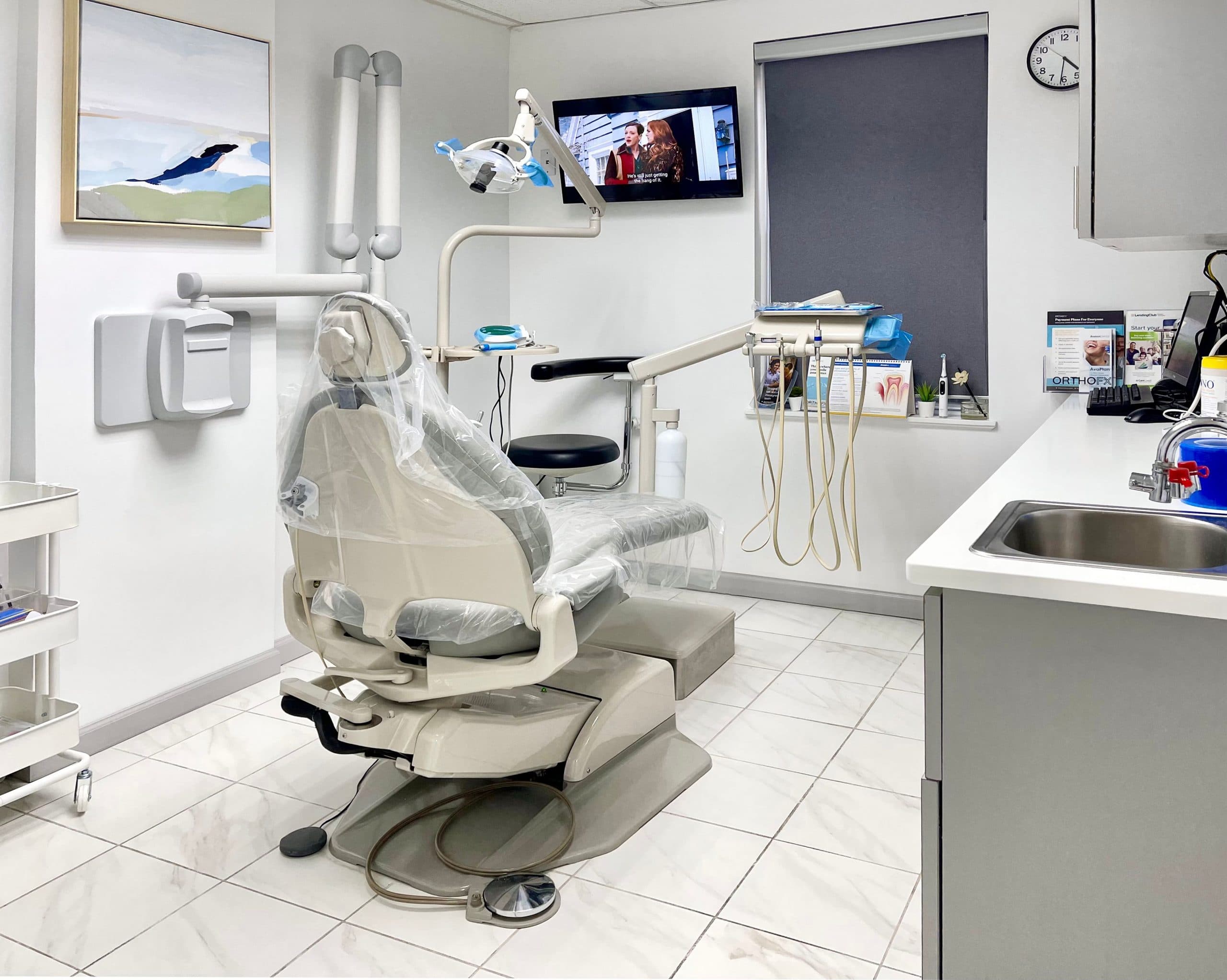
Teeth whitening lasts anywhere from a few months to three years, and the treatment you pick sets the outer limit while your daily habits decide where inside that range you land. In-office professional whitening holds for 1 to 3 years, dentist-supervised take-home trays hold for 6 months to a year or longer, over-the-counter strips and gels fade within a few weeks to a few months, and whitening toothpaste keeps surface stains down for about 3 to 4 months.
Below we lay out the expected timeline for every whitening type, explain the chemistry behind why a bright shade slowly drifts back, and walk through what happens in the first 48 hours and in the months that follow. We also cover the questions patients ask us most: how long the appointment takes, when you can eat normally again, how long sensitivity lasts, and how often whitening can be repeated.
How Long Does Teeth Whitening Last?
Teeth whitening lasts between a few months and three years, with most patients who choose professional treatment holding their result for roughly one year. That spread looks wide because whitening is not one procedure. It is a family of treatments that differ in peroxide strength, contact time, and how deeply the active gel reaches into the enamel.
Peroxide strength is the reason the range stretches so far. A whitening gel works by breaking apart chromogens, the darkly pigmented molecules that lodge inside the porous structure of enamel. Chromogen breakdown happens faster and reaches deeper when the peroxide concentration is higher, which is why a single professional session outperforms weeks of drugstore use.
Drugstore use still has a place, and it produces real change on surface staining. Surface staining, called extrinsic staining, sits on and just under the outer enamel and comes from coffee, tea, red wine, dark berries, and tobacco. Intrinsic staining sits deeper, inside the dentin layer, and traces back to aging, injury, infection, or certain medications taken during childhood. Whitening reduces both, but intrinsic discoloration needs stronger gel and longer contact, which shifts the realistic timeline for anyone whose yellowing comes from the inside out.
How Long Does Each Type of Teeth Whitening Last?
Each type of teeth whitening lasts a different length of time because each one delivers a different peroxide concentration over a different contact period. The American Dental Association reports that in-office bleaching agents brighten teeth by three to eight shades in a 30 to 60 minute application, while dentist-provided take-home trays carry 10% to 16% carbamide peroxide and work gradually over several weeks. Clinical trials and the treatment durations published by Healthline and Colgate line up closely on the figures in the table below.
| Whitening Type | How Long Results Last | Time to Visible Results | Typical Active Agent |
|---|---|---|---|
| In-office professional whitening | 1 to 3 years | Same visit | High-concentration hydrogen peroxide |
| Dentist-supervised take-home trays | 6 months to 1 year or longer | 1 to 4 weeks | 10% to 16% carbamide peroxide |
| Whitening strips | Up to 6 months | 1 to 2 weeks | Low-concentration hydrogen peroxide |
| Over-the-counter pens and gels | A few weeks to a few months | 2 days to 1 week | Low-concentration peroxide |
| Whitening toothpaste | 3 to 4 months | 2 to 6 weeks | Mild abrasives, sometimes peroxide |
| Whitening mouthwash | Short-lived, best as a supplement | Up to 3 months | Low-concentration hydrogen peroxide |
In-office treatment lasts the longest of any whitening option, holding for 1 to 3 years, while whitening toothpaste sits at the other end of the scale at 3 to 4 months. Professional teeth whitening also removes the guesswork that comes with drugstore products, since the gel strength is matched to your starting shade rather than packaged for the average shopper.
The average shopper buying strips is usually targeting extrinsic staining, and strips do that job well for a season. A season is roughly the honest expectation. Strips carry a fraction of the peroxide a dental office uses, and they sit on the teeth for minutes rather than being reapplied under supervision across a full session.
Why Does Professional Teeth Whitening Last Longer Than Store-Bought Kits?
Professional teeth whitening lasts longer than store-bought kits because the gel carries far more peroxide, stays in contact with the enamel under controlled conditions, and reaches pigment that weaker products never touch. Peroxide that reaches deeper pigment produces a shade change that takes far longer to reverse.
Reversal depends on how much pigment was cleared in the first place. A tooth lightened by one shade sits close to the point where new staining becomes visible again. A tooth lightened by five shades has a much larger buffer, so months of normal coffee drinking pass before anyone notices a difference. This buffer effect is the single most practical reason professional results outlast drugstore results, and it is the part most product packaging leaves out.
Packaging also leaves out supervision. Supervision matters because a dentist checks for untreated decay, exposed root surfaces, cracked enamel, and leaking old restorations before any gel goes on. Untreated problems let peroxide reach places it should never reach, which produces sharp pain and a poor result. We examine the mouth first, every time, so the gel does its work where it belongs.
How Long Does Laser or LED Teeth Whitening Last?
Laser and LED teeth whitening last about as long as any other in-office treatment, which is 1 to 3 years, because the light accelerates the gel rather than changing what the gel can achieve. Light-activated systems, including the blue-light protocols used in most dental offices, speed up peroxide breakdown so a session finishes in one appointment.
One appointment is the real selling point of light activation. An umbrella review of randomized trials comparing in-office bleaching with and without light activation found that the light shortens the process and improves convenience, while the peroxide concentration and the number of sessions remain the dominant drivers of the final shade. An updated systematic review and meta-analysis published in Operative Dentistry found no significant difference in shade change measured in shade guide units between in-office and at-home techniques overall.
Shade guide units are the standard way dentists measure a change objectively, and they explain why two people can leave with very different-looking smiles from the same technology. Technology sets the pace. Starting shade, enamel thickness, and aftercare set the finish line. Anyone comparing laser whitening, LED whitening, or a light-activated in-office system should judge them by peroxide concentration and session count rather than by the color of the lamp.
How Long Does Teeth Whitening Take, and How Fast Do You See Results?
In-office teeth whitening takes 1 to 2 hours in a single visit and produces visible results the same day, while dentist-supervised take-home trays take 1 to 4 weeks of nightly or daily wear. Same-day results are why so many patients book whitening ahead of a wedding, a reunion, or a job search.
A whitening visit at our Flushing office follows a consistent sequence, and knowing it in advance takes the mystery out of the appointment:
- We examine your teeth and gums and record your starting shade against a standard shade guide.
- We clean the tooth surfaces so the gel meets enamel rather than plaque or debris.
- We isolate and cover your lips and gums with a protective barrier before any gel is placed.
- We coat the front surfaces of the teeth with whitening gel and activate it with a blue light.
- We remove and reapply the gel several times across the session to keep the active agent fresh.
- We rinse, record the finished shade, and fit you with a take-home tray for touch-ups later on.
Most patients finish one to three shades whiter after a single session, and heavier staining sometimes calls for a second visit. A second visit is scheduled with a gap rather than back to back, because enamel benefits from time to rehydrate between treatments. Patients who want to see the kind of change a full cosmetic plan produces can look through our smile gallery before deciding how far to take things.
Deciding how far to take things is easier once you know that professional whitening can be combined with other cosmetic work. Bonding, crowns, and veneers are all matched to a shade, so whitening first and restoring second keeps the whole smile consistent.
Do Teeth Turn Yellow Again After Whitening?
Yes, teeth do turn yellow again after whitening, because bleaching removes existing stains without blocking new ones from forming. New stains form the same way the original ones did, through pigment from food, drink, and tobacco settling back into the enamel surface.
Enamel surface porosity is the mechanism behind the slow drift, and researchers track it precisely. A randomized clinical trial published in the Journal of Esthetic and Restorative Dentistry followed patients treated with 37.5% hydrogen peroxide and found that results remained effective one year later, with measurable color rebound beginning at the six-month assessment. A retrospective study from Ege University that tracked 50 patients across five in-office agents, including a 40% hydrogen peroxide Opalescence protocol, found no marked relapse during the first 6 to 12 months and only a rebound tendency emerging at 18 months.
Rebound at 18 months is a gentle slope rather than a cliff, and the numbers on at-home products tell the same story. A six-month clinical study published in the International Journal of Dentistry measured 18% shade relapse for Opalescence PF compared with 27% for a competing product, and the researchers concluded that re-bleaching at the six-month mark was unnecessary. Matis and colleagues recorded an average relapse of 45% at six months after at-home 10% carbamide peroxide, with teeth still clearly whiter than they had been before treatment.
Clearly whiter than before treatment is the practical takeaway, and touch-up demand backs it up. A randomized controlled trial published in Clinical Oral Investigations found that only 11.9% to 16.7% of cases needed a touch-up within six months. On the far end of the scale, Leonard and colleagues documented patients who showed no rebound at all for as long as 47 months, which is close to four years from a single course of treatment.
What Affects How Long Teeth Whitening Lasts?
Four factors affect how long teeth whitening lasts: what you eat and drink, whether you use tobacco, how consistent your oral hygiene is, and the natural thickness and color of your enamel. The first three sit entirely in your hands. The fourth is set by biology.
Diet and Drinks
Dark pigments in food and drink are the fastest route back to a duller shade. The National Coffee Association reported in its Spring 2025 National Coffee Data Trends survey that 66% of American adults drink coffee every day, averaging three cups daily, which makes coffee the most common staining exposure in the country by a wide margin. Three cups a day delivers a steady stream of chromogens to the enamel surface.
These are the foods and drinks that put the most pigment on your teeth:
- Coffee and black tea
- Red wine and grape juice
- Cola and other dark sodas
- Blueberries, blackberries, and cherries
- Beets and tomato-based pasta sauces
- Soy sauce, balsamic vinegar, and curry
- Acidic citrus drinks, which soften enamel and let other pigments settle
Settling pigment is easier to interrupt than to remove later. Drinking dark beverages through a straw, rinsing with water afterward, and brushing about 30 minutes after an acidic drink all reduce contact time between pigment and enamel. Anyone dealing with long-standing stained teeth usually finds that the habit changes matter as much as the treatment itself.
Tobacco Use
Tobacco is the harshest thing a whitened smile can face. Tar and nicotine deposit a yellow-brown film that binds tightly to enamel and works its way into surface pores far faster than dietary pigment does. Smoking and chewing tobacco both shorten whitening results dramatically, and patients who continue either one often see noticeable change within weeks rather than months.
Oral Hygiene
Consistent home care is the cheapest way to protect a whitening result. Plaque is a sticky film that holds pigment against the tooth, so every day plaque stays put is a day pigment gets pressed into the enamel. Brushing twice daily, flossing once daily, and keeping your cleaning schedule strips that film away before it turns into visible discoloration.
Enamel Thickness and Age
Enamel thins with age, and thinning enamel changes how a tooth looks even when the enamel itself is clean. Underneath the enamel sits dentin, a naturally yellow layer that grows darker and denser over the decades. Thinner enamel lets more of that dentin color show through, which is why two people with identical habits can hold a whitening result for very different lengths of time.
Can 60 Year Old Teeth Be Whitened?
Yes, 60 year old teeth can be whitened, and they often respond well, though the starting point and the realistic ceiling differ from a younger patient’s. A younger patient usually has thicker enamel and lighter dentin, so peroxide has more translucent material to work through and a paler base underneath.
Paler base material is not what older enamel sits on. Decades of chewing thin the enamel layer, and the dentin beneath deepens in color as secondary dentin forms inside the tooth. Peroxide still clears the pigment held in the enamel, which produces a genuine and visible lift, but the final shade reflects the dentin showing through rather than the enamel alone.
Dentin showing through is also the reason older patients often do better with a longer, gentler protocol than a single aggressive session. We frequently pair a professional session with several weeks of take-home tray wear, which gives the peroxide extended contact time at a lower concentration and tends to produce a more even result across the arch.
Which Teeth Cannot Be Whitened?
Teeth that cannot be whitened are the ones that are not made of natural enamel: crowns, veneers, bonding, and tooth-colored fillings all keep the shade they were manufactured in. Manufactured shades do not respond to peroxide at all, no matter how long the gel sits on them.
Peroxide passing over a restoration explains a problem patients sometimes discover after whitening. Natural teeth lighten, the restorations stay exactly where they were, and a front tooth that used to blend now stands out. Porcelain veneers hold their color beautifully over years, which is a strength in daily life and a planning issue at whitening time.
Planning around this is simple once the order is right. We whiten first, wait for the shade to settle, then match any new restoration to the brightened result. Patients who already have dental crowns on visible teeth should expect that replacing or refacing those crowns is part of the conversation if they want a uniformly brighter smile.
A uniformly brighter smile also depends on older filling material. Existing composite fillings on front teeth behave the same way crowns do and may need replacing after whitening to blend in again. Beyond restorations, two natural conditions respond slowly: tetracycline staining from childhood antibiotic exposure, which sits deep in the dentin, and fluorosis, which shows as chalky white or brown mottling. Both can improve with extended treatment, and both need a proper evaluation before anyone promises a specific outcome.
How Long After Teeth Whitening Can You Eat?
You can eat immediately after teeth whitening, though the standard clinical advice is to keep to lighter-colored foods and drinks for the first 48 hours while the enamel settles. Enamel settling refers to the brief window when the peroxide has opened the surface pores slightly and the tooth is more receptive than usual to whatever touches it.
Receptive enamel is the reason the 48-hour guideline exists, and the evidence on how much it actually changes the outcome is more interesting than most articles admit. A network meta-analysis published in the Journal of Dentistry and reported by the American Dental Association compared patients who followed a strict white diet with patients who drank coffee, tea, red wine, cola, and grape juice, and found comparable color change between the groups. A separate systematic review and meta-analysis of 17 studies published in Dentistry Journal reached the same conclusion, finding no significant difference in color one month after in-office treatment between restricted and unrestricted diets.
Unrestricted diets producing similar one-month outcomes does not mean the first two days are irrelevant. It means the final shade is driven far more by peroxide strength and total contact time than by a single cup of coffee on day one. Our practical guidance stays sensible rather than strict: favor water, use a straw for anything dark, rinse after eating, and skip tobacco entirely during those first two days.
Those first two days matter for comfort as much as for color. The same open enamel pores that let pigment in also let temperature changes travel more easily toward the nerve, which brings us to the question patients ask most often after treatment.
How Long Does Sensitivity After Whitening Last and How to Keep Teeth Comfortable
Sensitivity after whitening lasts 24 to 48 hours for most patients, and it typically fades on its own without any treatment. Fading on its own is the normal course, and the research puts firm numbers on both how common it is and how strong it feels.
How common it is surprises people. A systematic review published in the Journal of Applied Oral Science put the absolute risk of tooth sensitivity at roughly 63% for in-office bleaching and 51% for at-home bleaching. A multicenter randomized controlled trial published in the Journal of Dentistry found that about 75% of patients experienced some level of sensitivity during in-office treatment, with the lower arch carrying a notably higher risk than the upper arch.
Higher risk in the lower arch sounds alarming until you look at intensity rather than frequency. The same body of research measured average sensitivity at about 2.8 centimeters on a 10 centimeter visual analog scale, which places it firmly in the mild range, and found that it drops sharply or disappears entirely within 24 hours of the session ending. Patients who have dealt with tooth sensitivity after other dental work usually recognize the feeling as similar and just as short-lived.
Short-lived discomfort can be reduced further with preparation. A systematic review of 13 trials covering 841 patients, published in Cureus, found that 5% potassium nitrate combined with 2% sodium fluoride applied before in-office bleaching significantly lowered post-treatment pain scores. We use desensitizing protocols for patients who report sensitivity history, and we adjust gel concentration and session length rather than pushing through discomfort.
Pushing through discomfort is never the plan, and healthy gums make the whole process easier. Good gum health before treatment reduces the chance of irritation at the gumline, since inflamed tissue reacts more strongly to any contact with bleaching gel.
How Long Do White Spots on Teeth Last After Whitening?
White spots on teeth after whitening last 24 to 72 hours in most cases, because they come from temporary enamel dehydration rather than any damage. Enamel dehydration happens because peroxide draws water out of the enamel structure during treatment, and dry enamel scatters light differently than hydrated enamel does.
Light scattering is what produces that chalky, almost too-bright look in the mirror right after an appointment. Saliva rehydrates the enamel over the following day or two, the scattering settles, and the color evens out into the finished shade. This is also why the shade you see walking out of the office is not the shade you keep.
The shade you keep shows up two to three days later, and it usually looks more natural than the immediate result. Spots that are still visible after one to two weeks, or that feel rough to the tongue, point to something else: enamel hypomineralization, older fluorosis, or early demineralization. Any of those deserves an evaluation rather than another round of whitening.
How Do You Make Teeth Whitening Last Longer?
You make teeth whitening last longer by controlling pigment exposure, keeping plaque off the enamel, and using periodic touch-ups before the shade drifts too far. Drifting is gradual, so small habits compound heavily over a year.
These steps work in order of impact:
- Stop tobacco use completely, since nothing else undoes a whitening result faster.
- Drink coffee, tea, wine, and cola through a straw whenever the situation allows.
- Rinse your mouth with water right after anything darkly pigmented.
- Brush twice daily and floss once daily to keep plaque from holding pigment against the enamel.
- Add a whitening toothpaste to your routine, which maintains surface brightness for 3 to 4 months at a time.
- Keep your professional cleaning schedule so surface deposits are polished away twice a year.
- Use your take-home tray for a short touch-up at the first sign of drift rather than waiting for a full relapse.
Regular dental cleanings carry more weight in this list than most people expect. A cleaning removes the hardened deposits that a toothbrush cannot reach, and the polishing step at the end lifts fresh surface stain directly off the enamel. Patients who keep their six-month schedule almost always hold their shade longer than patients who skip visits.
Skipping visits also hides problems that quietly shorten results. A routine dental exam catches gum recession, small chips, and early decay, all of which change how light reflects off a tooth and all of which make future whitening less predictable.
How Often Can You Whiten Your Teeth?
You can whiten your teeth with a full professional session about once every six to twelve months, with short take-home touch-ups in between as needed. Touch-ups in between are what keep the interval comfortable, since a brief tray session maintains a shade far more easily than a full treatment restores one.
Restoring a fully relapsed shade takes more peroxide and more chair time than maintaining a good one, which is why we include a take-home whitening tray with every in-office treatment we provide. The tray is custom-fitted, and patients use it for a short refresh whenever they notice the shade softening. Patients across Queens tell us the tray is the part of the service they end up valuing most over the long run.
Over the long run, a well-cared-for tray lasts one to three years before the fit loosens or the material wears, and a new impression produces a fresh one. Spacing full sessions properly protects the enamel and keeps sensitivity low, and it fits naturally alongside the rest of a cosmetic dentistry plan built around long-term results rather than a single dramatic day.
Frequently Asked Questions
What Do Dentists Put on Gums to Protect Them From Whitening?
Dentists put a protective resin barrier on the gums before whitening, which is painted along the gumline and hardened with a curing light. This barrier keeps the high-concentration gel on the enamel and off soft tissue. Gum irritation from bleaching is generally mild and temporary when it occurs, and a properly placed barrier prevents most of it outright.
Does Teeth Whitening Have Side Effects, and How Long Do They Last?
Teeth whitening has two common side effects, temporary tooth sensitivity and mild gumline irritation, and both usually resolve within 24 to 72 hours. Research published in the Journal of Applied Oral Science places average sensitivity intensity at about 2.8 centimeters on a 10 centimeter scale, which is mild, and found that it drops sharply within a day. The American Dental Association considers whitening safe when performed by a licensed professional or when using at-home products carrying the ADA Seal of Acceptance.
How Many Shades Whiter Can Teeth Get?
Teeth can get three to eight shades whiter with in-office bleaching agents applied over 30 to 60 minutes, according to the American Dental Association, with individual results shaped by starting shade and stain type. At-home products typically produce one to two shades of change over several days to weeks. Heavily discolored teeth often need more than one session to reach the same point.
Does Whitening Work on Intrinsic Stains?
Whitening does work on intrinsic stains, but it works more slowly and needs stronger gel and longer contact time than surface staining requires. Intrinsic discoloration sits inside the dentin and comes from aging, trauma, infection, or childhood medication exposure. Extended take-home tray protocols often outperform a single in-office session for this type of discoloration.
Is Whitening Toothpaste Enough to Maintain Results?
Whitening toothpaste is enough to maintain surface brightness for 3 to 4 months at a time, though it cannot restore a shade that has already relapsed. Most whitening toothpastes rely on mild abrasives that polish away fresh surface stain, and some add low-concentration peroxide. Long-term daily use of heavily abrasive formulas can wear enamel, so alternating with an enamel-strengthening paste is the safer routine.
Do the Top and Bottom Teeth Respond to Whitening the Same Way?
The top and bottom teeth respond to whitening with similar color change, but the lower arch reports more sensitivity. A multicenter randomized controlled trial published in the Journal of Dentistry found the lower arch carried an odds ratio of 4.4 for sensitivity compared with the upper arch, with no meaningful difference in bleaching effectiveness or gum irritation between the two.
How Long Do Teeth Whitening Trays Last?
Teeth whitening trays last one to three years with proper care before the fit loosens or the material thins. Rinsing the tray in cool water after each use, drying it fully, and storing it in its case extend its working life. A tray that no longer seats snugly should be replaced, since gaps let gel escape onto the gums and leave sections of enamel untreated.
The Bottom Line
Teeth whitening lasts 1 to 3 years with in-office treatment, 6 months to a year with dentist-supervised trays, and a few weeks to a few months with over-the-counter products. The gap between those numbers comes down to peroxide strength and contact time, which decide how much pigment gets cleared in the first place. Clearing more pigment buys a bigger buffer before new staining becomes visible again, and that buffer is what patients experience as a result that simply keeps looking good.
Keeping it looking good is the part you control. Research consistently shows measurable color rebound beginning around the six-month mark, yet only a small share of patients actually need a touch-up that soon, and some hold their shade for years. Tobacco, daily coffee, and inconsistent home care shorten the timeline. Straws, rinsing, regular cleanings, and short tray refreshes stretch it.
If you are weighing whitening and want a straight answer about what your own teeth can realistically do, we are glad to take a look and talk it through. You can reach Avalon Dental at (347) 472-0318, or contact us online to set up a visit.