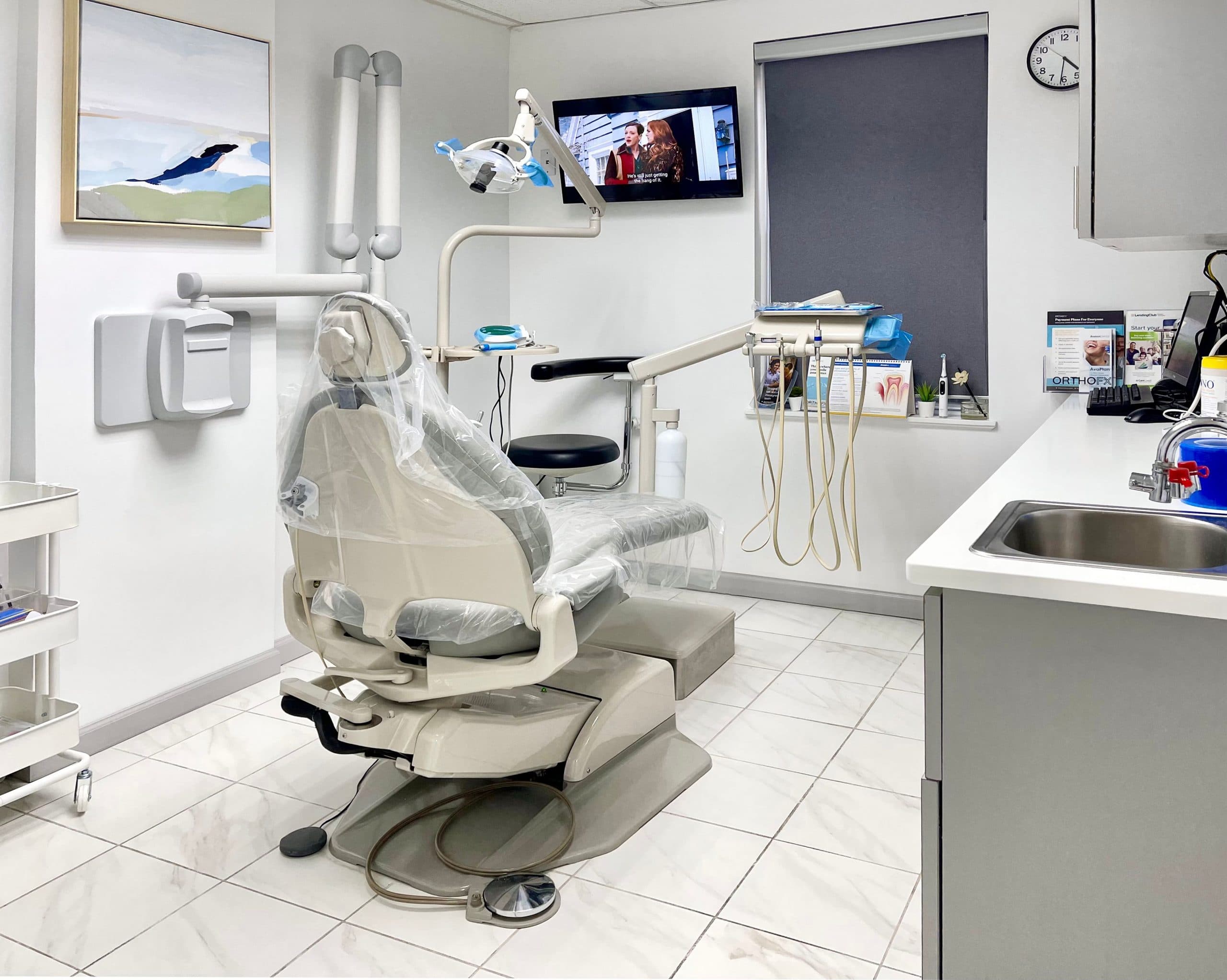
Teeth whitening is generally safe for healthy adults when it is used as directed or performed by a dental professional. The risks that do exist are well understood and mostly controllable: temporary tooth sensitivity, gum irritation from peroxide touching soft tissue, enamel changes from overusing unverified kits, and uneven color where crowns, veneers, or fillings sit alongside natural teeth.
Each of those has a specific cause and a specific fix, which is why supervised whitening produces so few problems. Below we go through the four risks in turn, separate what laboratory research shows from what actually happens in patients, cover whether laser and LED systems change the safety picture, and set out the five measures that keep the whole procedure predictable.
Is Teeth Whitening Safe?
Yes, teeth whitening is safe for healthy adults when performed by a dentist or when using products carrying the ADA Seal of Acceptance and following the instructions. Following the instructions is doing a great deal of work in that sentence, because most reported problems come from overuse or improper technique rather than from the products themselves.
The products themselves have a long track record. Peroxide-based whitening has been in general use for decades and is used by millions of people annually, and writing for Cleveland Clinic, Dr. Anne Clemons notes that dentists have not seen an increase in problems like cavity risk or tooth fractures in patients who whiten.
Patients who whiten under supervision have the fewest issues of all, which is the point of having an exam first. Our own teeth whitening starts with a check of the teeth and gums, because the conditions that cause trouble are usually visible before any gel is opened.
What Are the Risks of Teeth Whitening?
The four risks of teeth whitening are temporary tooth sensitivity, gum irritation, enamel changes from overuse, and uneven color caused by restorations that do not respond to bleach. Do not respond to bleach is a fixed property of those materials rather than a side effect, and it is the one risk that is entirely predictable in advance.
Tooth Sensitivity
Tooth sensitivity happens because peroxide diffuses through enamel into the dentin layer, where the tubules connect toward the nerve. Nerve involvement produces the short, sharp reaction to hot and cold that patients notice for a day or two afterward.
A day or two is the usual span. Published research puts the absolute risk at roughly 63% for in-office bleaching and 51% for at-home bleaching, and a multicenter randomized controlled trial found about 75% of patients report some sensitivity, with the lower arch carrying an odds ratio of 4.4 against the upper. Those figures sound high until you look at intensity: average severity measures about 2.8 centimeters on a 10 centimeter scale, which sits firmly in the mild range, and it usually resolves within 24 hours.
Within 24 hours is what separates this from a lasting problem. Patients who have experienced tooth sensitivity after other dental work generally recognize the sensation and find it behaves the same way.
Gum Irritation
Gum irritation happens when peroxide gel contacts soft tissue, which produces a temporary whitish patch and some tenderness. Tenderness of this kind clears within a few hours to a few days and leaves nothing behind.
Nothing behind is the normal outcome, and contact is what causes it in the first place. An ill-fitting tray lets gel escape onto the gumline, and a missing or poorly placed barrier during an in-office treatment does the same. Existing gum inflammation makes the tissue react more strongly, which is one reason gum health gets checked before treatment rather than after.
Enamel Changes From Overuse
Enamel changes are the risk people worry about most and encounter least, and they are associated with overusing store-bought or unverified kits rather than with supervised treatment. Unverified kits are the variable here, since some inexpensive products carry peroxide levels well above what any dentist would apply without protection.
Without protection and without a stopping point, repeated exposure is where the concern sits. Research cited by the American Dental Association notes that bleaching protocols may alter the surface roughness of enamel and may reduce the bond strength between enamel and composite or ceramic restorations. That second finding is practical rather than alarming, since it mainly argues for spacing whitening and bonding work apart.
Uneven Coloring
Uneven coloring happens because crowns, veneers, bonding, and tooth-colored fillings hold the shade they were manufactured in and do not respond to peroxide at all. The American Dental Association states plainly that only natural teeth are affected by bleaching agents, so patients with tooth-colored restorations should expect a difference to appear afterward.
A difference appearing catches people out when nobody raises it beforehand. Porcelain veneers hold their color beautifully for years, which is a strength in daily life and something to plan around at whitening time.
Planning around it is straightforward: whiten first, let the shade settle, then match any new restoration to the brighter result. Anyone with existing dental crowns on front teeth should expect replacing or refacing them to be part of the discussion if a uniform result is the goal.
Is Teeth Whitening Bad for Your Teeth?
Teeth whitening is not bad for your teeth at supervised concentrations, and the frightening claims circulating online mostly come from laboratory studies that do not reflect what happens in a living mouth. A living mouth is the crucial distinction, and almost nobody makes it.
Nobody makes it because the laboratory findings are real and easy to quote out of context. Those studies expose extracted teeth to peroxide under conditions no patient would ever experience. Extracted teeth have no blood supply, no saliva washing across them, and no living pulp responding to the exposure. Living pulp and saliva are precisely what protect a tooth in the mouth, and Cleveland Clinic makes the point directly: the erosion and microstructure findings people cite were produced in a lab setting rather than on living teeth.
Living teeth have decades of clinical observation behind them instead, and that observation has not produced a pattern of cavities, fractures, or structural failure attributable to whitening. What it has produced is a consistent picture of temporary sensitivity and temporary gum irritation, both of which resolve.
Resolving quickly is also true of the counterintuitive finding on concentration. A meta-analysis by Maran and colleagues found hydrogen peroxide at 25% to 35% produced outcomes comparable to 35% to 40%, and a systematic review cited by the American Dental Association found lower concentrations delivered less sensitivity alongside greater objective color change. Stronger is not safer, and it is not even reliably more effective.
What Destroys Enamel on Teeth?
Enamel is destroyed far more by everyday acid and abrasion than by supervised whitening. Acid from citrus, soda, sports drinks, wine, and stomach reflux dissolves mineral directly from the enamel surface, and that exposure happens multiple times a day for years.
Years of repeated acid exposure is a genuinely different order of risk from a whitening course lasting an hour or two. Aggressive brushing with a hard-bristled brush, grinding, and heavily abrasive whitening toothpastes used long-term all wear enamel mechanically. A supervised whitening treatment with protected gums sits well below all of those on any realistic list of threats to enamel.
How Are the Risks of Teeth Whitening Managed?
The risks of teeth whitening are managed by examining the mouth first, using custom-fitted trays, applying protective barriers to the gums, following the recommended duration and frequency, and treating sensitivity early rather than pushing through it. Treating sensitivity early is the step patients most often skip, and it is the easiest of the five. The table below pairs each risk with its cause and its control, drawing on American Dental Association guidance and published clinical research.
| Risk | Why It Happens | How It Is Managed |
|---|---|---|
| Tooth sensitivity | Peroxide diffuses through enamel into dentin toward the nerve | Pre-treatment desensitizing agents, lower concentrations, shorter or spaced sessions |
| Gum irritation | Gel contacts soft tissue through a poor tray fit or a missing barrier | Custom-fitted trays and a protective barrier placed over the gums before any gel |
| Enamel changes | Overuse of high-concentration or unverified products without a stopping point | Defined duration and frequency, supervised concentrations, ADA Seal products |
| Uneven coloring | Restorations hold their manufactured shade and do not bleach | Assessment before treatment and sequencing restorations after whitening |
| Reaching an unhealthy tooth | Untreated decay, cracks, or exposed roots let peroxide reach places it should not | A dental exam before starting, with any problems treated first |
| Unpredictable products | Some inexpensive kits carry peroxide levels far above supervised norms | Choosing products carrying the ADA Seal of Acceptance |
The Seal of Acceptance matters more than its low profile suggests, since it indicates a product has been found safe and effective in independent testing rather than simply marketed that way. A checkup exam covers the other half of the equation by catching decay, cracks, recession, and gum disease before any peroxide is involved.
Involving peroxide safely is what a supervised appointment is designed around, and at our Flushing office the sequence runs like this:
- We examine the teeth and gums, checking for decay, cracks, recession, and any active gum problems.
- We review your sensitivity history and decide whether desensitizing preparation makes sense.
- We record a starting shade against a standard guide so the change can be measured rather than guessed.
- We protect your lips and gums with a barrier before any gel touches a tooth.
- We apply the whitening gel to the tooth surfaces only, and activate it.
- We remove and reapply the gel several times across the session rather than leaving one application in place.
- We rinse, record the finished shade, and fit you with a custom take-home tray for controlled touch-ups.
Controlled touch-ups are where custom trays earn their place, because a tray made from an impression of your own teeth holds gel against enamel and away from gum tissue. Every in-office professional whitening we provide includes one.
Is Laser or LED Teeth Whitening Safe?
Laser and LED whitening are safe when performed professionally, though the published evidence suggests the light adds more sensitivity than it adds whitening. More sensitivity than whitening is a finding worth knowing before paying extra for a system marketed on its technology.
Marketing aside, the research is consistent. A systematic review and meta-analysis published in the Journal of Dentistry found that light activation did not enhance bleaching efficacy at hydrogen peroxide concentrations of 25% to 35%, while light-activated systems raised the likelihood of tooth sensitivity with an odds ratio of 3.53. An umbrella review in the Journal of Esthetic and Restorative Dentistry drew on ten systematic reviews published between 2007 and 2024 and found laser or light activation showed no consistent improvement in final whitening efficacy.
No consistent improvement does not make light-activated treatment unsafe. A separate umbrella review published in Heliyon found in-office and at-home techniques carried the same sensitivity risk even with light in the mix, which places light-activated systems within the normal range rather than outside it.
Outside that range is where unsupervised high-power devices sit. The sensible reading is that the safety of any in-office system comes from the concentration used, the gum protection applied, and the session length, rather than from the presence or absence of a lamp. Judge a whitening system on those three things.
Are Over-the-Counter Whitening Kits Safe?
Over-the-counter whitening kits are safe when they carry the ADA Seal of Acceptance and are used exactly as directed, and considerably less predictable when they do not. Considerably less predictable covers two specific problems that supervised treatment does not have.
The first problem is the tray. A boil-and-bite or one-size tray does not seal against your teeth, so gel escapes onto the gums and pools where it should not, which is the most common cause of irritation from home kits. The second is concentration, since some inexpensive products carry peroxide levels well above anything a dentist would apply to unprotected tissue, and others carry so little that people compensate by using them far more often than the label allows.
Using them more often than the label allows is where enamel concerns actually come from. Instructions vary by product for good reason: some are designed for once daily, some twice, some for a week and some for longer. Reading and following the specific instructions on the product you bought, rather than a general rule you remember, is the single most protective habit available to anyone whitening at home.
Are Natural and DIY Whitening Methods Safe?
Most natural and DIY whitening methods are either ineffective or actively harmful, and several of the popular ones damage enamel over time. Damage over time is the concern with the abrasive approaches in particular.
Abrasive approaches include activated charcoal powder and baking soda used aggressively, both of which scrub the enamel surface rather than lifting pigment chemically. Apple cider vinegar and lemon juice are worse, because acid dissolves mineral directly from enamel, and the brief cosmetic effect people notice is partly the enamel surface being etched. Oil pulling has little to no evidence supporting any whitening effect at all.
No evidence supporting it is the general picture Cleveland Clinic describes for this whole category, along with a specific warning worth repeating: do not use the hydrogen peroxide from your medicine cabinet on your teeth. Household peroxide is not formulated for oral use, has no delivery system to keep it off soft tissue, and carries real risk of chemical burns.
Chemical burns are avoidable, and so is disappointment. Anyone dealing with long-standing stained teeth gets a better and safer result from a supervised approach than from anything in a kitchen cupboard.
Who Should Not Whiten Their Teeth?
People who should postpone or avoid whitening include anyone with untreated decay, active gum disease, exposed root surfaces, or cracked teeth, along with children, pregnant and nursing patients, and anyone allergic to peroxide. Postpone is the right word for most of that list, since nearly every item is temporary once addressed.
These are the situations that call for treating something first or waiting:
- Untreated cavities, which let peroxide reach the inner tooth and cause sharp pain
- Active gum disease or inflamed tissue, which reacts strongly to any gel contact
- Exposed root surfaces from recession, since roots have no enamel covering
- Cracked or chipped teeth, which give peroxide an unintended route inward
- Extensive crowns, veneers, or bonding on front teeth, where the result would be uneven
- Known allergy to hydrogen peroxide or carbamide peroxide
- Pregnancy and nursing, where elective treatment is usually deferred
- Children in the primary or mixed dentition, which the American Academy of Pediatric Dentistry specifically discourages for full-arch cosmetic bleaching
- Anyone in the middle of orthodontic treatment with fixed brackets in place
Untreated decay deserves particular attention because it is the item people are least likely to know about. Patients across Queens are often surprised at a whitening consultation to learn they have a small cavity, and the early signs of one are easy to miss without an exam.
How Often Is Teeth Whitening Safe?
A full professional whitening treatment is safe about once every six to twelve months, with short custom-tray touch-ups in between as needed. In between is where sensible maintenance happens, and a brief tray refresh puts far less stress on the teeth than a repeat full session.
Repeat full sessions spaced too closely are the main way people overdo this. Enamel benefits from time to rehydrate between treatments, and sensitivity compounds when sessions stack up. Anyone finding they need a full treatment every couple of months is usually fighting a habit, such as heavy coffee or tobacco use, rather than a whitening problem.
A whitening problem is rarely what regular dental cleanings cannot help with, since a cleaning removes surface stain and polishing restores brightness without any peroxide at all. Two cleanings a year plus one whitening course keeps most people where they want to be.
Where people want to be is worth setting realistically at the start, and our smile gallery gives a more honest reference point than a stock photograph. Chasing a shade beyond what enamel can reach is the most common reason patients over-whiten.
What to Do If You Get Sensitivity or Gum Irritation
If you develop sensitivity or gum irritation after whitening, pause treatment, switch to a desensitizing toothpaste, and let the tissue settle before continuing. Letting it settle resolves the great majority of cases without any intervention at all.
Intervention helps for anyone who gets sensitivity repeatedly. A systematic review of 13 trials covering 841 patients found that 5% potassium nitrate combined with 2% sodium fluoride applied before in-office bleaching significantly lowered post-treatment pain scores, which is why we prepare sensitivity-prone patients rather than waiting to see what happens.
Waiting to see what happens is also the wrong approach with gum irritation that does not improve. A whitish patch on the gum after treatment normally fades within hours to a couple of days. Anything that is still sore after several days, spreading rather than shrinking, or accompanied by bleeding is worth a phone call rather than another whitening session.
Another whitening session is also the wrong response to a result that disappointed you, and the right one is a conversation about whether your discoloration suits bleaching at all. Options within cosmetic dentistry such as veneers or bonding reach shades that peroxide cannot.
Frequently Asked Questions
Is It Safe to Have Teeth Professionally Whitened?
Professional whitening is the safest way to whiten teeth, because the gel strength is matched to your teeth, your gums are protected with a barrier before any gel is applied, and a dentist has checked for decay, cracks, and gum disease first. Supervision removes the two biggest sources of home-kit problems, which are ill-fitting trays and unknown concentrations. Temporary sensitivity remains possible and typically resolves within a day.
What Is the Least Toxic Way to Whiten My Teeth?
The least risky approach is a dentist-supervised treatment or a dentist-provided custom tray, because both use known concentrations and keep gel off soft tissue. Products carrying the ADA Seal of Acceptance are the next safest option for home use. Household remedies such as charcoal, baking soda scrubbing, and vinegar are not gentler alternatives; several of them wear enamel or dissolve mineral directly.
Can Teeth Whitening Burn Your Gums?
Peroxide gel can cause a chemical burn on gum tissue if it sits against the gums, which shows as a white patch and some tenderness. These burns are almost always mild and heal within a few hours to a few days without treatment. Custom-fitted trays and a professionally placed protective barrier are what prevent the contact in the first place.
Does Whitening Weaken Teeth Over Time?
Supervised whitening at appropriate intervals has not been shown to weaken teeth over time. Cleveland Clinic notes that dentists have not observed increases in cavity risk or tooth fractures among patients who whiten, despite decades of widespread use. Repeated overuse of high-concentration products without supervision is a different situation and is the scenario the enamel warnings are aimed at.
Is Charcoal Toothpaste Safe for Whitening?
Charcoal toothpaste works by abrasion rather than by bleaching, and long-term daily use can wear enamel rather than whiten teeth. It removes some surface film, which produces a short-term impression of brightness, and it does nothing to the pigment held inside enamel. There is little evidence supporting it as a whitening method and reasonable concern about the abrasiveness of some formulations.
Is Whitening Safe During Pregnancy?
Cosmetic whitening is generally postponed during pregnancy and nursing, not because harm has been demonstrated but because elective treatments are routinely deferred and the safety data is limited. Most dentists recommend waiting and focusing on cleanings and preventive care in the meantime. Discuss timing with both your dentist and your physician.
Can You Overdo Teeth Whitening?
You can overdo whitening, and doing so is the most common route to genuine problems. Overuse typically means repeating full treatments too close together, using home kits for longer or more often than the label allows, or stacking several products at once. Signs you have gone too far include sensitivity that lingers beyond a few days, gums that stay sore, and teeth that look chalky or translucent at the edges.
The Bottom Line
Teeth whitening is safe for healthy adults, and the risks worth knowing about are narrow and well defined. Temporary sensitivity affects a majority of patients at mild intensity and clears within about a day. Gum irritation happens when gel meets tissue and resolves on its own. Enamel concerns trace to overuse of unverified products rather than to supervised treatment, and the alarming laboratory findings people quote were produced on extracted teeth rather than living ones.
What keeps all of that under control is unglamorous: an exam before starting, a barrier over the gums, a tray made from your own teeth, a defined duration, and a willingness to pause if something hurts. Those five measures are the difference between a procedure with a very good safety record and a home kit used three times a week for a month.
If you are weighing whitening and want an honest read on whether it suits your teeth, we are glad to take a look and talk through the options. You can reach Avalon Dental at (347) 472-0318, or contact us online to schedule a visit.