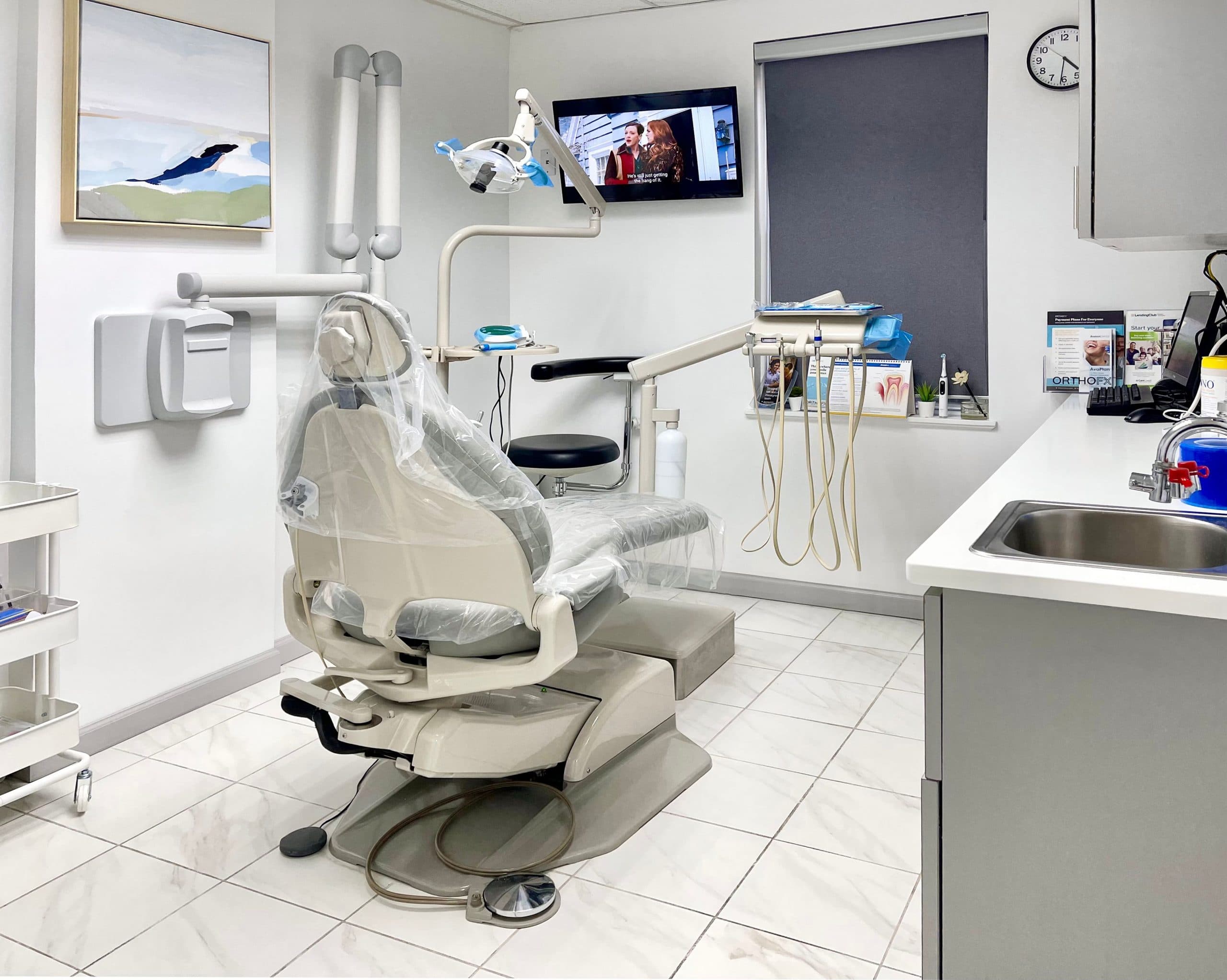
Normal recovery after a tooth extraction and bone graft involves mild to moderate discomfort and swelling that peaks by day 2 or 3 and then improves steadily from there. Facial swelling usually crests between 48 and 72 hours, light blood-tinged saliva is common for the first day or two, a white or pale yellow layer forms over the site within a few days, and a few sand-like graft granules in your mouth early on are expected.
What is not normal is pain that climbs again after the first 3 to 5 days, swelling that keeps growing past day 3 or returns after settling, heavy bleeding that will not stop with firm pressure, fever or pus or a foul taste, a large rush of gritty material after the first week, or numbness in the lip, chin, or tongue that does not fade. Below we go through both columns day by day, explain why day 3 feels like a setback when it is not, and cover how long the graft takes to mature before an implant can go in.
What Does Normal Recovery After a Tooth Extraction and Bone Graft Look Like?
Normal recovery after a tooth extraction and bone graft looks like swelling and soreness that build for two to three days, then decrease a little more each day, with the wound surface changing from a dark clot to a pale healing layer over the first week. A little more each day is the pattern that matters most, because direction of travel tells you more than any single symptom.
Direction of travel is also what separates this recovery from a plain extraction. A grafted socket is packed with small particles of bone material, often topped with a collagen plug and sutures, and sometimes covered by a thin barrier membrane. Sutures and membranes change what the site looks like in the mirror and change what counts as normal in the first two weeks.
Two weeks is roughly how long the soft tissue takes to close over the top. The bone underneath works on a far longer schedule, which is why a graft feels finished long before it actually is. Our oral surgery patients hear that distinction at the post-op visit, because the comfortable stage and the healed stage are months apart.
What Is Normal Day by Day After a Tooth Extraction and Bone Graft?
Normal healing after a tooth extraction and bone graft follows a predictable calendar: bleeding settles within 24 to 48 hours, swelling peaks at 48 to 72 hours, sutures dissolve around days 5 to 7, the gum closes over the site in 2 to 3 weeks, and the bone matures over 3 to 6 months. Published oral surgery guidance puts suture dissolution at 5 to 7 days and most graft maturation at 3 to 4 months, with larger grafts and sinus procedures running 5 to 6 months, and the table below pairs each of those timepoints against the signs that warrant a phone call.
| Timepoint | What Is Normal | What Is Not Normal |
|---|---|---|
| First 24 hours | Light bleeding or pink-tinged saliva, numbness fading over a few hours, swelling beginning, dark red clot at the site | Bleeding that pools or refills the mouth after 30 to 45 minutes of firm gauze pressure |
| Days 2 to 3 | Peak swelling and peak soreness, possible bruising on the cheek or jaw, a few sand-like granules in the mouth | Numbness in the lip, chin, or tongue that has not improved at all |
| Days 3 to 5 | Swelling starting to fall, soreness easing daily, white or pale yellow layer forming over the socket | Pain that increases again after improving, swelling that keeps growing or returns |
| Days 5 to 7 | Sutures loosening or dissolving, surgical glue sloughing away, shallow crater with pale tissue in it | Fever, chills, visible pus, or a foul taste and odor that will not clear |
| Week 2 | Minimal discomfort, bruising faded, gum tissue creeping across the opening | A large rush of gritty material or visible chunks of graft washing out |
| Weeks 3 to 4 | Gum closed or nearly closed, occasional tightness, comfortable eating on the other side | Exposed graft material or membrane sitting proud of the gum |
| Months 1 to 3 | No pain, firmness developing under the gum, small bone fragments occasionally working free | New pain or swelling appearing weeks after everything settled |
| Months 3 to 6 | Bone maturing, imaging showing fill, clearance for the next step | Imaging showing the site has not consolidated |
Imaging is what settles the last row, since bone maturity cannot be judged by feel. Feel is reliable for the early rows, and the earliest rows are where nearly all the worry lives.
Why Is Day 3 the Worst After Tooth Extraction?
Day 3 is the worst after a tooth extraction because the body’s inflammatory response peaks between 48 and 72 hours, which is exactly when swelling, stiffness, and soreness all reach their maximum at the same time. The same time is the key phrase. Each symptom alone is manageable, and they simply happen to converge.
Converging symptoms catch people off guard for a second reason. Most patients expect recovery to improve in a straight line from the moment they leave the office, so a day that feels worse than day 1 reads as a complication rather than as the normal top of a curve. Jaw stiffness, called trismus, often peaks here too and makes opening the mouth harder for a few days.
A few days is the whole span. From day 3 onward the curve turns and each day should be measurably better than the one before it. When day 4 or day 5 is worse than day 3 rather than better, that reversal is the signal worth acting on.
What Are the Signs a Tooth Extraction and Bone Graft Are Healing Well?
The signs a tooth extraction and bone graft are healing well are swelling that peaks and then falls, bruising that fades within a week, blood-tinged saliva that stops within 24 to 48 hours, a white or pale yellow layer forming over the site, a few loose graft granules early on, and soreness that decreases day by day. Day by day improvement is the thread running through all six.
All six of those signs describe a site that is quietly doing its job. Bruising on the cheek or jaw appears in some patients, especially anyone taking blood thinners, and it typically follows the same fading pattern as a bruise anywhere else on the body. Patients who want a closer look at what an uncomplicated healing socket looks like at each stage tend to feel a good deal calmer afterward.
What Is the White or Yellow Layer Over the Extraction Site?
The white, cream, or pale yellow layer over an extraction site is granulation tissue, the soft immature tissue that fills a healing wound. Granulation tissue forms as the blood clot is gradually replaced, and it carries the blood vessels and cells that will eventually build gum and bone.
Gum and bone both start here, which is why this layer appears in every uncomplicated socket. It is not pus and it is not infection. Pus is thicker, arrives with a foul taste and usually a fever, and does not sit as a flat film across the opening. A mottled yellow film inside a shallow crater at day 5 is exactly what a healthy grafted site looks like.
Is It Normal to Lose Bone Graft Granules?
Losing a few bone graft granules is normal in the first several days, because a socket is deliberately packed slightly full and the surface particles are not held in place by anything yet. These particles feel like fine sand or salt on the tongue, and finding a handful of them over the first few days changes nothing about the outcome.
The outcome changes when the volume changes. A large rush of gritty material, or visible chunks coming out after the first week, means the bulk of the graft is moving rather than settling. That distinction, a few grains early versus a lot of material late, is the line to watch.
How Painful Is Bone Graft Recovery?
Bone graft recovery is mildly to moderately painful for most patients, with discomfort peaking on day 2 or 3 and then easing steadily, and most people stop needing regular pain medication within the first few days. Adding a graft to an extraction does not add much to the pain, because the graft material sits inside a socket the extraction already created.
The extraction created the wound, so the surgical trauma is essentially the same procedure with an extra step. What does change discomfort levels is how difficult the tooth was to remove. A surgical extraction involving an incision or sectioning of the tooth produces more soreness and more swelling than a simple one, regardless of whether a graft went in afterward.
Afterward, the approach that works best is staying ahead of the pain rather than waiting for it to build. We review a specific over-the-counter combination with every surgical patient at the appointment, since the right regimen depends on your medical history and what else you take.
What Does Throbbing Pain After a Tooth Extraction and Bone Graft Mean?
Throbbing pain after a tooth extraction and bone graft usually means normal inflammation in the first 72 hours, and usually means something else once you are past day 3. Past day 3 the throbbing pattern most often points to dry socket or to infection, especially if it radiates toward the ear or jaw and does not respond to pain medication that worked earlier in the week.
Pain medication losing its effect is a meaningful change, not a tolerance problem. Throbbing that arrives with a foul taste suggests infection. Throbbing that arrives with an empty-looking socket and no visible clot suggests dry socket. Either one is worth a same-week call rather than a wait-and-see week.
What Is Not Normal After a Tooth Extraction and Bone Graft?
What is not normal after a tooth extraction and bone graft is worsening pain after the first 3 to 5 days, swelling that grows past day 3 or returns after subsiding, heavy bleeding that will not stop, fever or pus or a persistent foul taste, major loss of graft material after the first week, and numbness that does not improve as the anesthetic wears off. Each of these describes a reversal rather than a symptom, which is what makes them easy to spot once you know to watch direction.
Watching direction means comparing today against yesterday rather than against how you hoped to feel. Pain that dramatically increases, or returns with intensity after a stretch of improvement, is the most reliable single warning sign there is. Swelling behaves the same way: growth after day 3, or a second wave after the first one settled, points to infection rather than to inflammation.
Infection announces itself in other ways too. A fever, chills, visible pus, or a taste and odor that keeps coming back after rinsing all belong in the call-today group, and the broader signs of infection around a tooth apply just as much to a surgical site as to a decayed one.
A surgical site adds two warnings of its own. Heavy, continuous bleeding that does not slow after 30 to 45 minutes of firm biting pressure on fresh gauze needs attention the same day. So does numbness in the lip, chin, or tongue that has not started improving once the local anesthetic should have worn off, which our protocol sets at 12 hours.
Is It Harder to Get a Dry Socket With a Bone Graft?
A bone graft does not eliminate dry socket risk, though a grafted socket behaves differently because the space is packed with graft material and often sealed with a collagen plug, sutures, or a membrane rather than left to rely on a clot alone. Relying on a clot alone is what makes an ungrafted socket vulnerable, since dry socket happens when that clot dissolves or dislodges and leaves bone exposed.
Exposed bone is what produces the pain, and the baseline numbers are worth knowing. Published oral surgery literature puts dry socket at roughly 1% to 5% after routine extractions and as high as 30% after surgical removal of impacted lower wisdom teeth, with lower molars affected up to ten times more often than upper ones. A retrospective review of 3,033 lower third molar extractions performed by a single surgeon recorded an overall rate of 2.6%.
That 2.6% figure climbs sharply with specific habits. A prospective observational study published in Cureus found smoking carried an odds ratio of 6.41 for developing dry socket, and poor oral hygiene carried an odds ratio of 9.53. Both of those are behaviors, which means both are within your control during the healing window.
How Likely Is Dry Socket on Day 4?
Day 4 sits at the tail end of the highest-risk window, since dry socket typically appears 1 to 4 days after an extraction. Most cases that are going to happen have already declared themselves by then, and getting through day 4 with pain that is steadily improving is a good sign.
A good sign is not a guarantee, because delayed cases do occur. The practical test at day 4 is the same one that applies all week: pain that is fading means healing, and pain that has turned and started climbing means a call.
How Long Does It Take to Heal After a Tooth Extraction With a Bone Graft?
Healing after a tooth extraction with a bone graft takes about 2 to 3 weeks for the gum tissue to close and 3 to 6 months for the bone to mature enough to support an implant. Two timelines running at different speeds is the part patients find confusing, because the mouth feels completely normal months before the bone is actually ready.
Actually ready means measurably consolidated, not comfortable. Published oral surgery guidance puts most socket grafts at 3 to 4 months, with larger reconstructions and sinus procedures commonly needing 5 to 6 months or longer. During that window the graft material is gradually replaced by your own bone, a process that depends on new blood vessels growing into the site during the first weeks.
The first weeks therefore matter more than their share of the calendar suggests. Tissue analysis of grafted sockets has found roughly 39.7% newly formed bone with only about 5% residual graft material remaining, which shows how thoroughly the body converts the scaffold into real bone when healing goes well.
When Can You Get a Dental Implant After a Bone Graft?
You can usually get a dental implant 3 to 6 months after a bone graft, once imaging confirms the site has enough height, width, and density. Density is checked with x-rays or a three-dimensional scan rather than estimated, because an implant needs stable bone contact along its whole surface to fuse properly.
Fusing properly is called osseointegration, and it is the reason nobody rushes this step. Smaller socket grafts often clear at the shorter end of the range, while sinus augmentation and larger ridge reconstructions take longer. Once the site is cleared, dental implants become a straightforward next appointment rather than a question mark.
Do You Need a Bone Graft After a Tooth Extraction?
You need a bone graft after a tooth extraction whenever you plan to replace the tooth with an implant, because the jawbone around an empty socket shrinks quickly and substantially in the first few months. Quickly and substantially are measurable, not rhetorical.
Measurements come from a systematic review by Tan and colleagues published in Clinical Oral Implants Research, which found horizontal bone loss of 29% to 63% and vertical loss of 11% to 22% in the six months following an extraction, averaging 3.79 mm of width and 1.24 mm of height. Schropp and colleagues reported ridge width shrinking by up to 50% within 12 months, with two-thirds of that loss occurring in the first three months alone.
The first three months do the most damage because the bundle bone lining the socket, which existed only to hold the tooth’s ligament, resorbs completely within about four weeks of the tooth leaving. Nothing replaces it unless something is placed there.
Placing something there is what bone grafting does, and the evidence supports it. A Bayesian network meta-analysis published in the Journal of Clinical Periodontology concluded that socket grafting preserves ridge height and width more favorably than leaving a socket to heal on its own. A prospective study measured grafted sites losing 1.61 mm of height against 2.51 mm ungrafted, and 3.37 mm of width against 4.34 mm ungrafted.
Ungrafted sites are still a reasonable choice in some cases. A graft is generally unnecessary when the tooth is a wisdom tooth that will not be replaced, when an implant is going in immediately at the same visit, or when the remaining bone walls are thick and intact and no restoration is planned. Patients across Queens often make this call at the consultation, since the decision is far easier before the extraction than after it.
Can You Get a Bone Graft Months or Years After a Tooth Extraction?
Yes, you can get a bone graft months or years after a tooth extraction, though the procedure changes. A socket graft placed at the time of extraction simply fills an existing space, while a graft placed later has to rebuild volume that is already gone, using ridge augmentation or sinus augmentation techniques.
Rebuilding lost volume takes a larger procedure, a longer healing period, and sometimes a barrier membrane to hold the material in place. It works well and it is done routinely, so a tooth lost years ago does not rule out an implant. Anyone weighing implant dentistry after a long gap should expect the grafting stage to come first and to add several months to the overall plan.
Can You Place a Bone Graft After an Infected Tooth Extraction?
Yes, a bone graft can be placed after an infected tooth extraction, as long as the socket is thoroughly cleaned of infected tissue first. Cleaning the socket means removing the soft infected material completely before any graft material goes in, since graft particles placed into an unclean site are far more likely to fail.
Failing to clear an infection is the main reason grafts in these cases go wrong, which is why antibiotics are commonly prescribed alongside the procedure. In some situations the surgeon will choose to clean the site, let it settle for several weeks, and graft at a second appointment instead. Both approaches are standard, and which one fits depends on how much infection was present and how intact the bone walls are.
What Helps Bone Grafts Heal Faster?
Bone grafts heal faster when the site is left undisturbed, blood flow is protected, nutrition supports bone formation, and the prescribed medications are finished. Left undisturbed is the single most important item, since the graft has no mechanical stability of its own for the first several weeks.
These steps matter in roughly this order:
- Stop smoking and vaping completely. Nicotine constricts blood vessels and cuts the blood supply the graft depends on, and implant failure has been reported at 11.28% in smokers against 4.76% in nonsmokers.
- Protect the clot for the first 24 hours. No straws, no spitting, no vigorous rinsing, and no brushing on the night of surgery.
- Use cold then warm. A cold compress 15 minutes on and 15 minutes off through the first 24 hours, switching to warm compresses during hours 24 to 48.
- Rinse gently with salt water. A quarter teaspoon of salt in 8 ounces of warm water, 3 to 4 times daily, never forcefully, and skipping alcohol-based mouthrinse entirely during healing.
- Chew on the opposite side for about two weeks. Pressure on the graft site displaces particles before the tissue has closed over them.
- Finish any antibiotics. Stopping early because you feel fine is one of the more common causes of a late graft infection.
- Eat for healing. Protein, calcium, and vitamin D all feed bone formation, and staying hydrated supports everything else.
- Rest for the first day. Strenuous activity raises blood pressure, which increases bleeding, swelling, and graft particle loss.
Our full post-op instructions set out the exact protocol we give every surgical patient, including the compress schedule and the rinse concentration. Following the written version rather than working from memory is worth the two minutes it takes to read.
What Is Not Allowed After a Tooth Extraction and Bone Graft?
What is not allowed after a tooth extraction and bone graft is anything that creates suction, pressure, or disturbance at the site, plus anything that restricts blood flow to healing tissue. Suction and pressure are the two mechanical enemies, and restricted blood flow is the biological one.
Avoid all of the following during the healing period:
- Straws of any kind, since the suction pulls directly on the clot and the graft
- Smoking, vaping, and chewing tobacco
- Spitting forcefully or rinsing vigorously
- Touching or poking the site with your tongue, a finger, or a toothbrush
- Brushing directly over the graft for about two weeks, though brushing everything else continues normally after the first night
- Chewing on the surgical side
- Hard, crunchy, or small-seeded foods such as popcorn, nuts, and chips that can lodge in the site
- Hot foods and drinks during the first 24 hours
- Alcohol-containing mouthrinse for at least the first week
- Heavy lifting, strenuous exercise, and anything that spikes your blood pressure for the first day or more
- Sleeping flat or on the surgical side, since elevation reduces swelling
Diet in particular gets easier than most people expect, and cold soft foods for the first 24 hours followed by warm soft foods afterward covers nearly every situation. Protein shakes, smoothies eaten with a spoon, yogurt, and scrambled eggs all work well.
Work out the timing for your first meal using our guidance on eating again, which covers when to start and how to advance. Coffee falls under the hot-drinks restriction for the first day and is fine warm rather than hot after that.
After that, alcohol is the one restriction people underestimate. It thins the blood, interacts with pain medication, and slows tissue repair, so we ask patients to skip it entirely through the healing phase, and our guidance on drinking alcohol after oral surgery explains the timing in more detail.
When to Call Your Dentist or Oral Surgeon
Call your dentist or oral surgeon the same day for severe or worsening pain, growing facial swelling, heavy bleeding, fever, or visible pus, and within a day or two for persistent numbness, a large loss of graft material, or anything that feels like it is moving backward. Moving backward is the criterion that covers everything else.
Keep Your Scheduled Post-Op Visit
Attend the follow-up appointment even if you feel completely fine. This visit checks the sutures, confirms the tissue is closing, and catches quiet problems before they become loud ones. At our Flushing office, Dr. Chun Pae Cho, our on-site Oral and Maxillofacial Surgeon, handles these grafts and the follow-up care in the same building.
Call Within a Day or Two
Call soon if numbness in the lip, chin, or tongue has not improved beyond 12 hours, if a large amount of gritty material has come out after the first week, if the graft material or membrane looks exposed above the gum, or if stitches came loose much earlier than expected. None of these is an emergency, and all of them are easier to address early.
Call the Same Day
Call immediately for pain that increases rather than decreases after day 3, swelling that grows or returns, bleeding that will not stop after 30 to 45 minutes of firm gauze pressure, a fever with chills, or visible pus and a foul taste that keeps returning. Patients who need an emergency dentist for a surgical site can be seen quickly rather than waiting for the next routine opening.
One boundary is worth stating plainly. Swelling accompanied by a fever, or any difficulty breathing or swallowing, needs a hospital emergency department rather than a dental office.
Frequently Asked Questions
How Soon Can I Drink Water After a Tooth Extraction and Bone Graft?
You can drink water almost immediately after a tooth extraction and bone graft, as long as you sip from a glass rather than through a straw. Sipping is fine; suction is not. Staying hydrated actually supports healing, so there is no reason to hold off on water once the gauze comes out and the bleeding has slowed.
Can I Drink Coffee 24 Hours After a Tooth Extraction and Bone Graft?
You can drink coffee 24 hours after a tooth extraction and bone graft, provided it is warm rather than hot and you drink it from a cup. Hot liquids in the first day can increase discomfort and disturb the clot, which is why chilled drinks are recommended for the first 24 hours and warm ones from hours 24 to 72 onward.
What Happens If You Don’t Rinse With Salt Water After an Extraction?
Skipping salt water rinses after an extraction leaves food debris and bacteria sitting in the socket, which raises the risk of infection and slows healing. Gentle rinsing with a quarter teaspoon of salt in 8 ounces of warm water, 3 to 4 times daily, clears the area without disturbing the graft. Rinsing forcefully causes the opposite problem by washing graft particles out.
What Should I Do on the First Night After a Tooth Extraction and Bone Graft?
On the first night after a tooth extraction and bone graft, rest with your head elevated, keep taking pain medication on schedule, and do not brush your teeth at all. Skipping brushing for that first night gives the clot time to stabilize. Keep the cold compress cycle going while you are awake and sleep on the opposite side or on your back.
Do Stitches Falling Out Mean the Bone Graft Came Out?
Stitches falling out does not mean the bone graft came out. Most sutures placed at a graft dissolve within about 5 to 7 days, and surgical glue placed over the site sloughs away on a similar schedule. Finding a loose stitch or a piece of glue in your mouth is expected, and the graft material underneath stays where it was packed while the gum tissue closes over it.
Can You Feel Bone Fragments Weeks After an Extraction?
Yes, you can feel small bone fragments weeks after an extraction. These are usually tiny bony spicules from the walls of the socket that work their way toward the surface as the site remodels, and they are separate from graft material. Most smooth out or come free on their own. Any fragment that stays sharp or keeps irritating the tongue is easy to remove at a quick visit.
How Long Should Swelling Last After a Bone Graft?
Swelling after a bone graft peaks at 48 to 72 hours and generally resolves within one to two weeks. Bruising on the cheek or jaw fades on a similar schedule. Swelling that is still increasing after day 3, or that disappears and then comes back, falls outside the normal pattern and should be evaluated.
The Bottom Line
Normal recovery after a tooth extraction and bone graft is easier to judge by direction than by any single symptom. Swelling and soreness should build for two to three days and fall from there, blood-tinged saliva should stop within a day or two, a pale layer should form over the socket during the first week, and a few sand-like granules early on mean nothing has gone wrong. Anything that reverses that direction, pain climbing again after day 3, swelling growing or returning, fever, pus, or a large loss of graft material after week one, is the signal to pick up the phone.
Picking up the phone early is also what protects the reason you had the graft in the first place. Research puts bone loss at 29% to 63% horizontally in the six months after an extraction, with most of it happening in the first three months, and a graft exists to hold that space so the site stays ready. The gum closes in two to three weeks, the bone matures over three to six months, and imaging rather than comfort decides when the site is ready for implant placement.
If something about your healing does not look or feel right, or you are still deciding whether to graft at the time of an upcoming extraction, we are glad to take a look and talk it through. You can reach Avalon Dental at (347) 472-0318, or contact us online to schedule a visit.