Root Canals in the New York Metro Area
What Is a Root Canal?
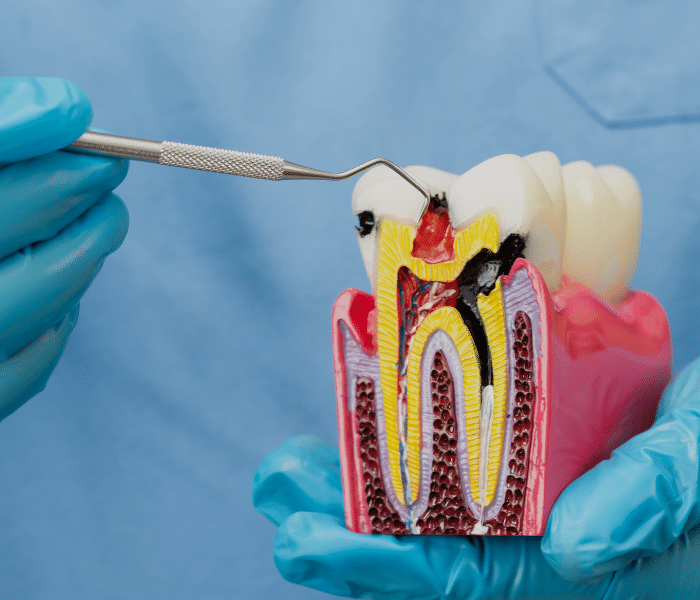
A root canal is a dental procedure that saves a tooth when the inner pulp (the soft tissue containing nerves and blood vessels) becomes infected or inflamed. During the treatment, your dentist removes the damaged pulp, cleans and disinfects the inside of the tooth, then fills and seals it to prevent further infection. Finally, the tooth is typically restored with a crown to protect it and restore full function.
Root canals have a reputation for being painful, but modern techniques and anesthesia make the procedure no more uncomfortable than getting a filling. In fact, a root canal relieves the severe pain caused by the infection — it doesn’t create it.
Most root canal treatments can be completed in one or two appointments, depending on the severity of the infection and which tooth is affected.
Think of a root canal as a way to rescue a tooth that would otherwise need to be extracted. It’s a proven procedure that can save your natural tooth and keep your smile intact.
Why Are Root Canals Important?
Root canals are essential for preserving your natural teeth and protecting your oral health. Here’s why they matter:
- Saves Your Natural Tooth: Extraction might seem simpler, but keeping your natural tooth is always the best option for maintaining proper bite alignment and jawbone health.
- Relieves Pain: The infection causing your toothache is what hurts — the root canal eliminates that pain and prevents it from coming back.
- Prevents Spread of Infection: Untreated tooth infections can spread to surrounding teeth, gums, and even into your bloodstream, causing serious health complications.
- Restores Function: Once treated and crowned, your tooth can function normally for chewing and speaking.
- Cost-Effective Long-Term: Saving a tooth with a root canal is more affordable than extracting it and replacing it with an implant or bridge.
- Protects Adjacent Teeth: Keeping your natural tooth prevents neighboring teeth from shifting out of position.
Avoiding a needed root canal only makes the problem worse. The infection won’t heal on its own, and delaying treatment can lead to tooth loss and more extensive dental work.
What Happens During a Root Canal?
Here’s what you can expect during your root canal treatment at Avalon Dental:
- Examination and X-Rays: Your dentist examines the affected tooth and takes X-rays to assess the extent of infection and plan the treatment.
- Local Anesthesia: The area around your tooth is numbed thoroughly, so you won’t feel pain during the procedure.
- Isolation: A small protective sheet (rubber dam) is placed around the tooth to keep it clean and dry during treatment.
- Access Opening: Your dentist creates a small opening in the top of the tooth to access the infected pulp chamber.
- Pulp Removal: The infected or damaged pulp is carefully removed from inside the tooth and root canals.
- Cleaning and Shaping: The inside of the tooth and canals are cleaned, disinfected, and shaped to prepare for filling.
- Filling the Canals: The cleaned canals are filled with a biocompatible material called gutta-percha to seal them and prevent reinfection.
- Temporary or Permanent Restoration: A temporary filling is placed, or in some cases, a permanent crown is placed to protect and restore the tooth.
- Follow-Up (if needed): If a temporary filling was used, you’ll return for a permanent crown to complete the restoration.
The entire procedure is straightforward, comfortable, and designed to get you out of pain and save your tooth.
Who Needs a Root Canal?
Root canals are necessary when the pulp inside your tooth becomes infected or damaged. You might need a root canal if you’re experiencing:
- Severe Tooth Pain that doesn’t go away or worsens when chewing or applying pressure
- Prolonged Sensitivity to hot or cold temperatures that lingers even after the stimulus is removed
- Tooth Discoloration where a tooth becomes darker or grayish, indicating pulp damage
- Swollen or Tender Gums near a specific tooth, sometimes with a pimple-like bump (abscess)
- A Cracked or Chipped Tooth that has exposed the inner pulp to bacteria
- Deep Decay that has reached the nerve of the tooth
- Repeated Dental Procedures on the same tooth that have stressed the pulp
Root canals aren’t just for people in severe pain. Sometimes teeth need root canal treatment even when there are minimal symptoms, which is why regular checkups are so important.
Signs You May Need a Root Canal
- You have persistent, throbbing tooth pain
- Your tooth hurts when you bite down or chew
- You notice swelling or tenderness in your gums
- Your tooth is sensitive to hot or cold that lingers
- You see a pimple-like bump on your gum near a tooth
- Your tooth has darkened or changed color
- You have a cracked or broken tooth
Don’t ignore these warning signs. The sooner you get treatment, the better your chances of saving the tooth and avoiding complications.
Ready for Your Root Canal Treatment?
At Avalon Dental, we understand that root canals can feel intimidating, but our compassionate team is here to make the experience as comfortable and stress-free as possible. We use modern techniques and gentle care to relieve your pain and save your natural tooth. Whether you’re dealing with severe discomfort or have been told you need a root canal, we’re here to help you feel better fast.
👉 Call us or contact us online to schedule your routine checkup exam today! Let’s get you out of pain and protect your smile.
View All Of Our Dental Services
General Dentistry
- Routine Checkup Exam
- Dental X-Rays
- Dental Cleanings
- Periodontal Maintenance
- Composite Fillings
- Dental Crowns and Bridges
- Dentures
- Root Canals
- Periodontal (Gum) Disease Treatments
- Severe Toothache
- Facial Swelling
- Dental Abscess
- Broken Jaw
- Broken Filling
- Broken Dental Crown
- Loose Tooth
- Oral Surgery & Extractions
- Pediatric Dentistry
- Cosmetic Bonding
- Digital Smile Design
- Clear Aligners
- Teeth Whitening (Opalescence and POLA)
Cosmetic Dentistry
- Porcelain Veneers
- Porcelain Crowns
Implant Dentistry
- Implant Bridges
- Implant Dentures
Clear Braces: Invisalign® & OrthoFX™
- Invisalign
- OrthoFX