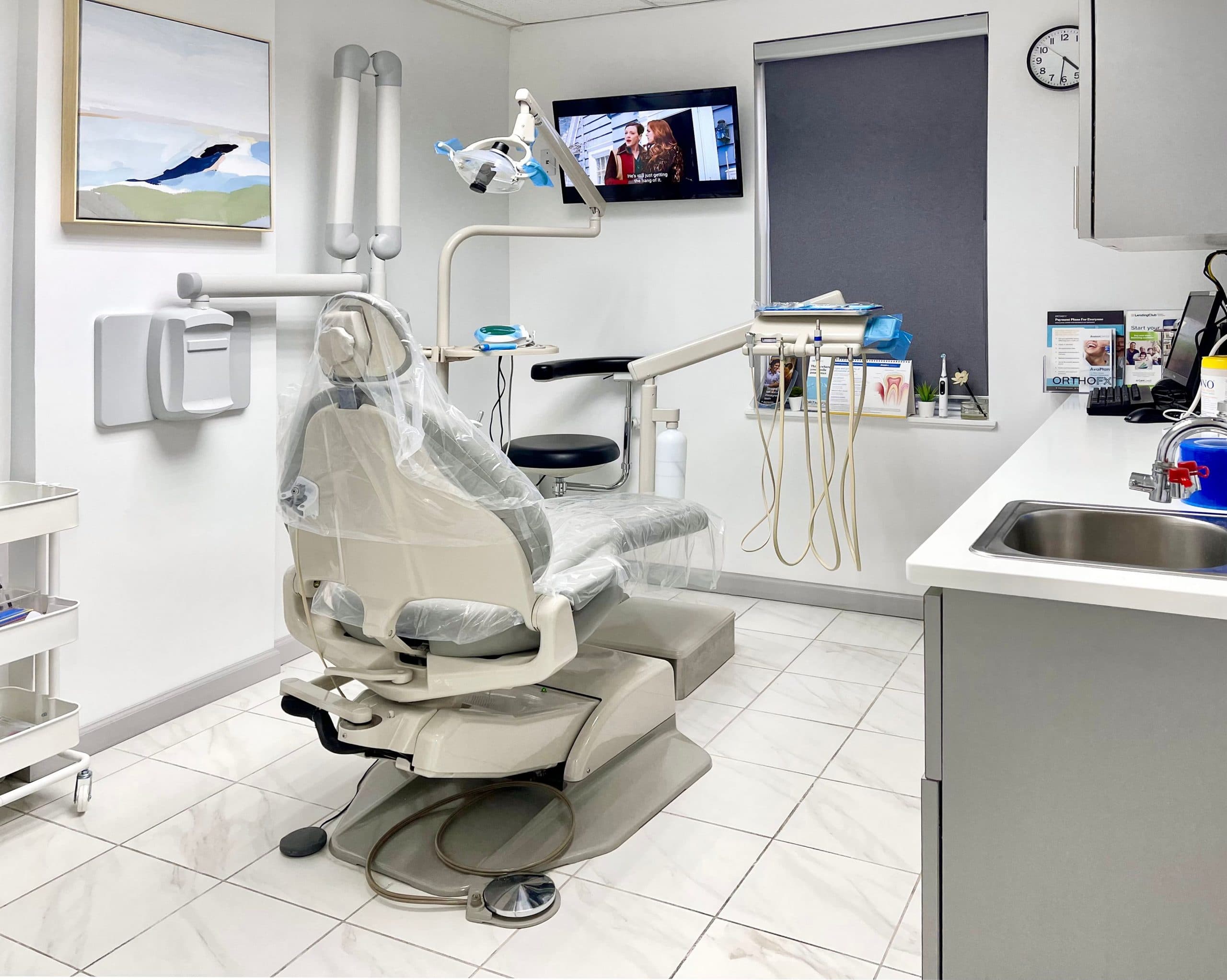
During a routine dental exam, your dentist reviews your health history, takes digital X-rays when needed, examines each tooth for decay and damage, evaluates your gums for signs of disease, performs an oral cancer screening, and finishes with a professional cleaning. According to the American Dental Association, most adults should schedule this visit every 6 months. Yet CDC data shows that only about 63% of adults aged 18 to 64 visited a dentist in the past year. This article walks through every step of a routine dental exam so you know exactly what to expect, why each part matters, and what your dentist is looking for.
Step-by-Step: What Happens During a Routine Dental Exam
A routine dental exam follows a specific sequence. Each step is designed to evaluate a different part of your oral health and catch problems as early as possible. Here is what happens from the moment you sit down in the chair.
Your dentist or hygienist starts by reviewing your medical history. They ask about any changes in your overall health, new medications, allergies, or symptoms you may be experiencing. This step matters because conditions like diabetes, heart disease, and pregnancy can all affect your oral health and may change how your dentist approaches treatment.
Patients in Flushing and the surrounding areas of Queens who take medications for chronic conditions should always mention them at the start of the appointment, even if they seem unrelated to dental care.
Digital X-Rays and What They Reveal
Digital X-rays are a standard part of most routine dental exams. They reveal problems that are invisible during a visual inspection, including cavities between teeth, infections at the root of a tooth, bone loss from gum disease, impacted teeth, and cysts or tumors.
Digital X-rays use significantly less radiation than traditional film X-rays. According to the ADA, the radiation from a set of dental X-rays is comparable to the amount of background radiation a person receives from natural sources in a single day. The images appear on a screen within seconds, allowing your dentist to review them with you in real time.
Most patients get a full set of X-rays every 1 to 2 years and bitewing X-rays (focused on the back teeth) at each checkup. Your dentist adjusts the schedule based on your risk factors, age, and dental history.
Patients across Bayside and Fresh Meadows who have not had X-rays taken in over a year should expect them at their next routine checkup exam.
The Tooth-by-Tooth Examination
After X-rays, your dentist performs a detailed visual and tactile examination of every tooth. They check for cavities, cracks, chips, worn fillings, and signs of grinding (bruxism). They also look at existing restorations like crowns, fillings, and bridges to make sure they are still intact and functioning properly.
According to the CDC, 91% of adults aged 20 to 64 have had at least one cavity in their lifetime, and approximately 26% of adults in the same age group have untreated dental decay. Many of these cavities are found during routine exams before the patient feels any pain. Catching decay early means a simple filling rather than a root canal or crown later.
Your dentist may use a dental explorer (a thin, curved instrument) to check the surfaces of your teeth and test the edges of existing fillings. If a cavity is found, they will explain the size, location, and recommended treatment.
For patients who have older fillings or crowns that may be wearing down, general dentistry services include replacement restorations to protect the tooth before further damage occurs.
Gum Health Evaluation
The gum evaluation is one of the most important parts of a routine dental exam. Your dentist or hygienist uses a small instrument called a periodontal probe to measure the depth of the pockets around each tooth. Healthy pockets measure 1 to 3 millimeters. Pockets of 4 millimeters or more can indicate the beginning of gum disease.
According to the CDC, approximately 47% of adults aged 30 and older have some form of periodontal disease. Among adults 65 and older, that number rises to 70.1%. Gum disease is often painless in its early stages, which is why most people do not know they have it until a dentist checks.
Your dentist also looks for signs of gum recession, redness, swelling, and bleeding. If early gum disease (gingivitis) is found, it can usually be reversed with improved home care and more frequent professional cleanings. If it has progressed to periodontitis, a deeper treatment called scaling and root planing may be needed.
Patients in Kew Gardens and Whitestone who notice bleeding when they brush or floss should bring it up at their next visit, as this is one of the earliest warning signs of gum disease.
For patients already diagnosed with gum disease, periodontal maintenance cleanings every 3 months help keep the condition under control.
Oral Cancer Screening
An oral cancer screening is included as part of a thorough routine dental exam. Your dentist examines your lips, cheeks, tongue, floor of the mouth, palate, throat, and the tissues lining your mouth. They look for red or white patches, sores that have not healed, lumps, thickened tissue, or any other abnormalities. They also feel (palpate) your jaw, neck, and lymph nodes for unusual swelling or hardened areas.
According to the American Cancer Society, approximately 54,000 Americans are diagnosed with oral or oropharyngeal cancer each year. The five-year survival rate for oral cancer caught at a localized stage is approximately 84%, according to data published by the National Cancer Institute. When diagnosed at a late stage, the survival rate drops significantly. A study published in the journal Cancer found that patients who rarely or never visited the dentist were more than three times as likely to be diagnosed at an advanced stage compared to patients who visited at least annually.
The screening takes only a few minutes and is completely painless. It is one of the most valuable parts of a dental exam, especially for patients over 40 and those who use tobacco or alcohol.
If you notice a sore in your mouth that does not heal within two weeks, unexplained numbness, or persistent difficulty swallowing, do not wait for your next scheduled visit. Contact an emergency dentist for prompt evaluation.
Patients throughout Long Island and the greater Queens area who keep up with regular dental visits give their dentist the best opportunity to catch abnormalities early, when treatment is most effective.
Professional Cleaning (Prophylaxis)
After the examination, a dental hygienist performs a professional cleaning. This includes scaling (removing plaque and tartar from the tooth surfaces and below the gumline), polishing (smoothing the tooth surfaces and removing surface stains), and flossing.
Even patients who brush and floss daily develop tartar in areas that are difficult to reach at home. Tartar cannot be removed with a toothbrush. It requires professional instruments. According to a Delta Dental survey, only about 4 in 10 Americans floss daily, and the average brushing time is 1 minute and 52 seconds, which falls short of the ADA-recommended 2 minutes. These gaps in home care make professional cleanings even more critical.
For patients with healthy gums, a standard prophylaxis cleaning twice a year is typically sufficient. For patients with gum disease, a periodontal maintenance schedule of every 3 months is standard.
Families in Murray Hill and Auburndale who want to keep their teeth free of tartar buildup benefit from staying on a consistent dental cleaning schedule.
Bite and Jaw Evaluation
Your dentist also evaluates how your upper and lower teeth come together (your bite) and checks for signs of temporomandibular joint (TMJ) problems. They look for evidence of teeth grinding or clenching, which can cause headaches, jaw pain, cracked teeth, and premature wear on dental restorations.
According to the Journal of Oral Rehabilitation, sleep bruxism affects an estimated 8% to 16% of adults. An ADA Health Policy Institute survey reported that over 70% of dentists have seen an increase in patients with teeth grinding and clenching in recent years. If grinding is detected, your dentist may recommend a custom nightguard to protect your teeth.
Bite issues can also affect how well orthodontic treatments like Invisalign or OrthoFX clear aligners work, so catching them early is important.
What Each Part of the Exam Detects: A Quick Reference
| Exam Component | What It Detects | How Often |
| Medical History Review | Health changes, medication interactions | Every visit |
| Digital X-Rays | Hidden cavities, bone loss, infections, cysts | Every 6-12 months |
| Tooth-by-Tooth Exam | Cavities, cracks, worn restorations | Every visit |
| Periodontal Probing | Gum disease, pocket depth, bone loss | Every visit |
| Oral Cancer Screening | Lesions, patches, lumps, abnormal tissue | Every visit |
| Professional Cleaning | Plaque, tartar, surface stains | Every 6 months (or 3 for perio) |
| Bite and Jaw Check | Grinding, clenching, TMJ issues | Every visit |
Data sourced from the American Dental Association, CDC, and published clinical guidelines on preventive dental care.
What Happens After the Exam
Once the exam and cleaning are complete, your dentist discusses their findings with you. If everything looks healthy, they confirm when your next visit should be scheduled. If any issues were found, they explain the problem, the treatment options, and the recommended timeline.
Common follow-up treatments include composite fillings for small cavities, root canal therapy for deep infections, crowns for teeth with significant damage, and scaling and root planing for gum disease. In some cases, a referral to a specialist may be needed.
Our Flushing office has an on-site oral and maxillofacial surgeon for patients who need surgical procedures or dental implants, which means fewer referrals and faster treatment.
Frequently Asked Questions
What Is Included in a Routine Dental Exam?
A routine dental exam includes a review of your medical history, digital X-rays (when needed), a tooth-by-tooth examination for decay and damage, a gum health evaluation using periodontal probing, an oral cancer screening of the soft tissues in your mouth and throat, a professional cleaning to remove plaque and tartar, and an assessment of your bite and jaw function. According to the ADA, these visits should occur every 6 months for most patients.
Is a Routine Dental Exam the Same as a Cleaning?
A routine dental exam is not the same as a cleaning, though the two are usually done during the same appointment. The exam is the diagnostic portion where your dentist checks for cavities, gum disease, oral cancer, and other problems. The cleaning is the preventive portion where a hygienist removes plaque and tartar from your teeth. Both are essential, but they serve different purposes. The exam identifies problems; the cleaning helps prevent them.
Why Are Dentists Pushing Deep Cleanings?
Dentists recommend deep cleanings when periodontal probing reveals pockets of 4 millimeters or deeper, which indicates gum disease. According to the CDC, nearly 47% of adults over 30 have some form of periodontal disease. A deep cleaning (scaling and root planing) removes bacteria and tartar from below the gumline to stop the disease from progressing. It is not a sales tactic. It is a medically necessary treatment that prevents bone loss and tooth loss.
Patients in Flushing who are told they need a deep cleaning can get a clear explanation and treatment plan at their general dentistry appointment.
Why Do Dentists No Longer Pull Teeth?
Dentists no longer pull teeth as a first option because modern treatments can save most damaged teeth. Root canals, crowns, and periodontal therapy restore teeth that would have been extracted in the past. Saving natural teeth preserves jawbone density, maintains proper bite alignment, and avoids the need for costly replacements. Extraction is reserved for teeth that are too severely damaged to repair.
When extraction is necessary, replacement options such as dentures or dental implants restore function and appearance.
How Many 70 Year Olds Still Have All Their Teeth?
Very few 70 year olds still have all their natural teeth. According to the CDC, approximately 1 in 7 adults aged 65 and older have lost all of their teeth. By age 65, an estimated 96% of Americans have had at least one cavity. Regular preventive dental exams throughout life dramatically reduce the risk of severe tooth loss in older age.
What Cancers Affect Teeth?
Cancers that affect teeth and the oral cavity include oral squamous cell carcinoma (the most common, accounting for about 90% of oral cancers), cancers of the tongue, floor of the mouth, palate, gums, and oropharynx. According to the American Cancer Society, approximately 54,000 new cases of oral and oropharyngeal cancer are diagnosed in the United States each year. Certain cancers, including leukemia and lymphoma, can also produce symptoms in the mouth such as swollen gums, loose teeth, or jaw pain. Routine dental exams include screenings that help detect these conditions early.
What Does 7 Mean at the Dentist?
The number 7 at the dentist refers to a periodontal pocket depth measurement of 7 millimeters. During your gum evaluation, the dentist or hygienist measures the depth of the space between each tooth and the surrounding gum tissue. Healthy pockets are 1 to 3 millimeters. A measurement of 7 millimeters indicates advanced periodontal disease with significant bone loss around that tooth. Immediate treatment is typically needed to prevent tooth loss.
The Bottom Line
A routine dental exam is one of the most important appointments you can keep. In about an hour, your dentist evaluates your entire oral health, catches problems that are invisible to you, screens for life-threatening conditions like oral cancer, and removes buildup that your toothbrush cannot reach. The data consistently shows that patients who visit the dentist every 6 months have fewer cavities, less gum disease, and better long-term outcomes.
If it has been more than 6 months since your last exam, now is a good time to get back on schedule. At Avalon Dental on Northern Blvd in Flushing, we provide thorough, comfortable exams for patients of all ages. Our multilingual team speaks English, Mandarin, Cantonese, Spanish, and Korean.
Patients across Queens, Bayside, Long Island, Little Neck, and the greater New York metro area can book a routine dental exam by phone or online. We offer late evening and weekend hours to fit your schedule.
For patients who need cosmetic improvements discovered during their exam, we offer a full range of services including porcelain veneers, whitening, and smile design consultations.